IAQ and Airborne Particulate Matter PM

April 3, 2013

Particle pollution, also called particulate matter or PM, is a complex mixture of extremely small particles and liquid droplets in the air. When breathed in, these particles can reach the deepest regions of the lungs.  Exposure to particle pollution is linked to a variety of significant health problems such as asthma.

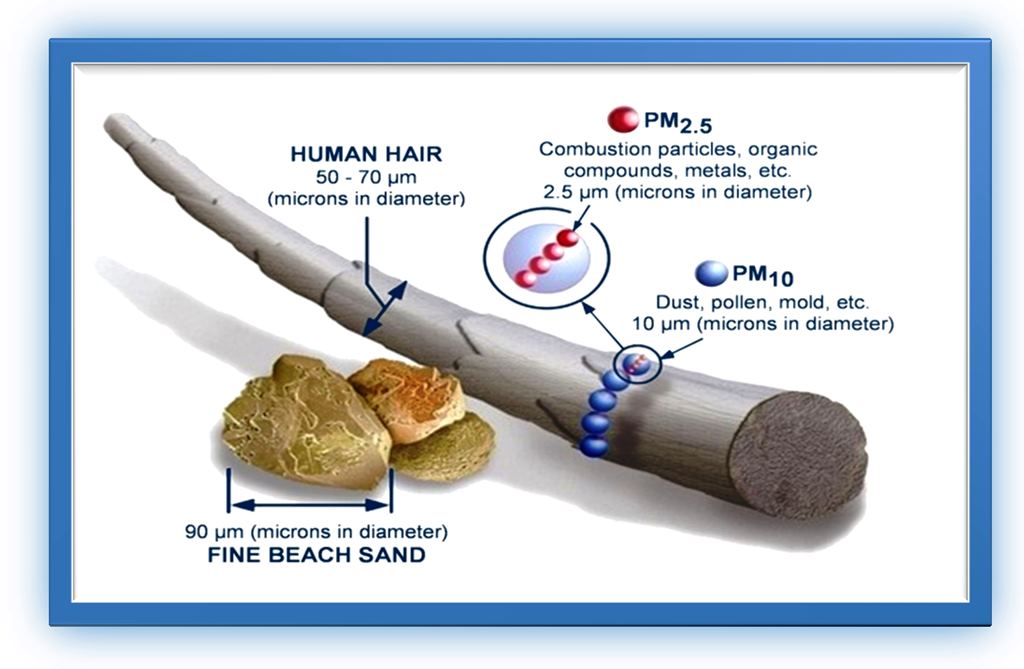
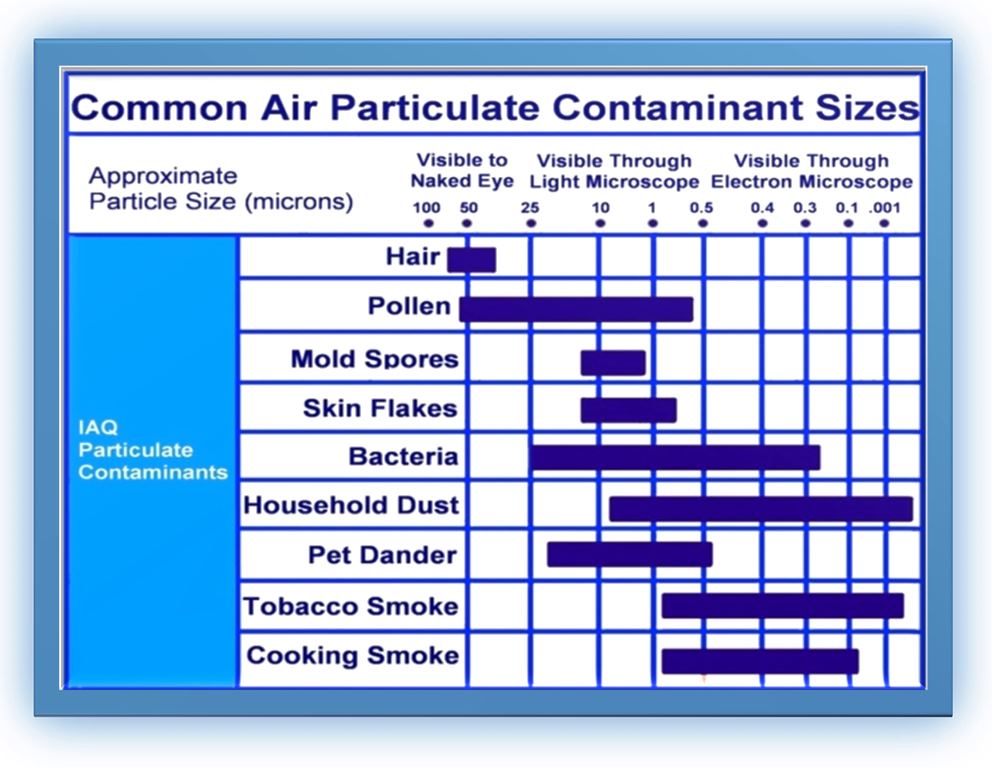
Particulates are a mixture of organic and inorganic substances suspended in the air. They can be solids and/or liquids and exist in a range of sizes. Particulate size is measured in micrometers (µm), one millionth of a meter. The EPA refers to different groups of particulates that include:

  1. Total suspended particulates (TSP) – representing the range of particulate matter normally found in the urban atmosphere. TSP generally includes from 1µm to 50µm.
  2. PM10 – refers to particulate matter of less than 10m m in diameter. PM10 is generally considered the most useful particulate measure. Particles less than 10µm in diameter can be inhaled and have the potential to reach the tracheo-bronchial region of the lung.
  3. PM2.5 – comprises of fine particulate matter less than 2.5µm in diameter. Particles of this size are capable of deep lung penetration.
  4. Total suspended particulates (TSP) – representing the range of particulate matter normally found in the urban atmosphere. TSP generally includes from 1µm to 50µm.

The Occupational Safety and Health Administration have a recommendation for 8 hour exposure for particles in the .3 µm size which is a recommended 0-40,000 particles/cc this is found in the OSHA Technical Manual.

Particulate Reduction;

The goal of improving the Indoor Air Quality is going to begin with particulate reduction.  Particulate matter (PM) is the name for a wide range of particles that are small enough to be carried by the air, therefore; breathed in by people. They can be solid or liquid, or a mixture of both.

The size of particles may range from 0.005 µm to 100 µm in diameter. In comparison, the average size of a human hair is 60 µm. PM10 are particles that are 10 µm or less in diameter.  PM2.5 are particles of 2.5 µm or less in diameter.  The finer particles pose the greatest threat to human health because they can travel deepest into the lungs.

Indoor particulate matter is a mixture of substances like these:

  • Carbon (soot) emitted by combustion sources;
  • Tiny liquid or solid particles in aerosols;
  • Fungal spores;
  • Pollen; and
  • A toxin present in bacteria (endotoxin).

Indoor Particulate Matter Florida Indoor Air Quality Solutions IAQS II


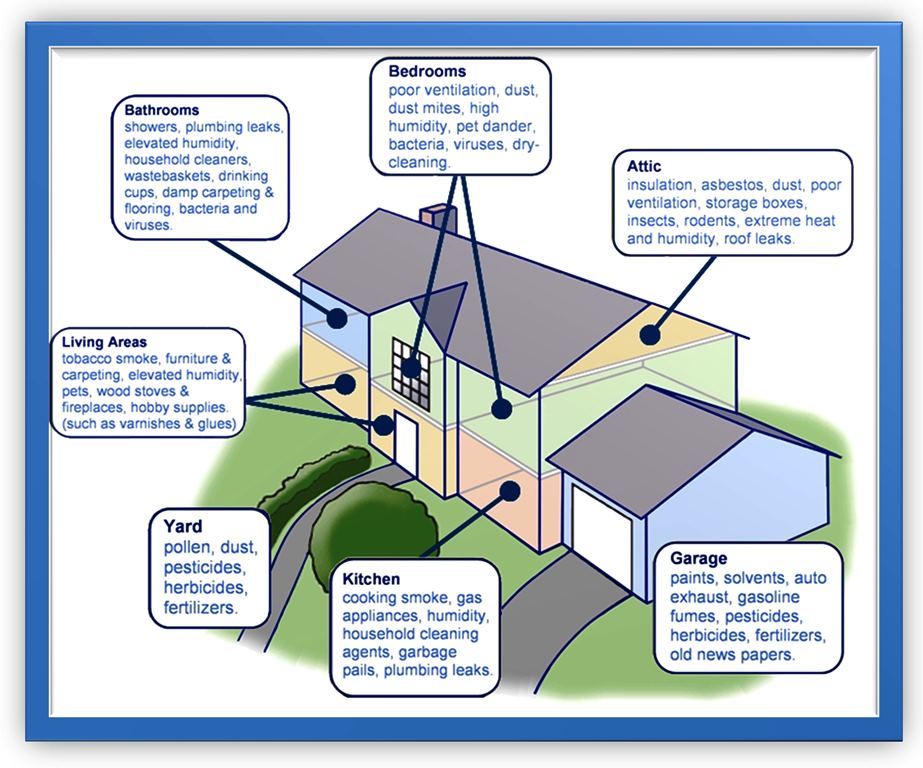
In a properly-maintained home, most of the airborne particulate matter comes from the outside. However, some homes do have significant sources of indoor particulate matter which come from the following sources:

  • Cigarette smoking is the greatest single source of particulate matter in homes and buildings where people smoke;
  • Cooking: especially frying and sautéing;
  • Malfunctioning combustion appliances: for example, furnaces without a proper air filter;
  • Non-vented combustion appliances like gas stoves;
  • Wood-burning appliances like wood stoves and fireplaces: especially if the smoke leaks or back drafts into the home; and
  • Mold growth.

Reducing concentrations of particulate matter in your home;

  1. Furnaces and ventilation systems: Make sure that furnaces and ventilation systems are properly maintained, and that you replace filter screens as often as recommended by the manufacturer. All combustion appliances, including furnaces, should be inspected by a qualified technician yearly.
  2. Cooking: Turn your exhaust fan on when you are cooking, and especially when frying.
  3. Woodstoves: Choose properly sized woodstoves and make sure that the doors close tightly. Have your chimney cleaned yearly, too.
  4. Mold: Prevent mold growth and the release of mould spores into your indoor air by controlling humidity and fixing water leaks and water-damaged areas
  5. Smoking: Don’t allow people to smoke indoors because particulate matter levels increase with every smoker in the building.
  6. Clean: Use your HEPA vacuum cleaner regularly.

Indoor Particulate Matter Florida Indoor Air Quality Solutions IAQS IV

Your vacuum cleaner, as a general rule, is really only efficient at trapping particles that have settled onto the floor or whatever surface you’re vacuuming.  Even many room air cleaners are of limited effectiveness in typical building environments, because every time someone walks across a room, opens a door or window, or flips on the central air handling home, thousands if not millions of superfine particles are introduced into the breathing space as the room air is disturbed or exchanged. Since portable air cleaner airflow rates are often fairly low in relation to the rate of room contamination, many people with portable air cleaners may still end up breathing more dust than they realize.

How can you stop or prevent dust? Well, you can’t, at least not completely, since even humans produce their own organic dust and the surfaces within the building are also constantly “shedding” micro-particles. Of course, you can make sure you have good entrance matting in place, so outdoor contaminants and dusts are not tracked in as much.  You can also try to cleanup or contain other sources of fine particles (e.g., paper dust from tissue boxes, dirty air ducts or HVAC filters, etc.) Finally, you can make sure that the processes you use to clean your homes removes rather than redistribute dust as much as possible. This would include vacuuming surfaces with an HEPA (high efficiency particulate air) filtered vacuum cleaner.   Use HEPA vacuum cleaners or high efficiency vacuum cleaner bags. These dramatically reduced the amount of dust, allergen and pollens pumped back into the air by the vacuum cleaner.

Indoor Particulate Matter Florida Indoor Air Quality Solutions IAQS XX
John Lapotaire, CIEC
Florida Indoor Air Quality Solutions, IAQS
www.FloridaIAQ.com

WINDOW CONDENSATION, Causes and Cures

April 2, 2013

Image

Window Condensation Florida Indoor Air Quality Solutions IAQS

Each winter more and more homeowners become interested in the subject of window condensation.  It’s not a happy interest. It stems from bad experiences with window condensation, which range from irritating to downright expensive.

Many home owners seem to believe that it’s a windows problem, a cheap or single pane window issue. They call their builder or the window supplier and say, “My windows are all wet, and it must be the fault of the builder or the windows.” Well, not quite… Water on windows is condensation, and it can be a problem. However, it’s not a window problem, and the solution does not come from the windows.

It may strike you as odd, but the growing condensation problems of the nation are caused by progress and improvements in the construction of your home.  Yes, if you have trouble with window condensation it’s probably because you live in a “tight” modern home that you can heat and cool for a fraction of the cost it took to heat and cool the house your parents lived in. 

This article explains the moisture problems of the “tight” home that lead to window condensation. It offers suggestions for curing condensation problems in existing homes and provides suggestions for those who are planning on building a home.  Your new home will be a “tight” home and there are more changes or upgrades that you can add to the home during construction that will help to prevent excessive moisture.  This can be a bit more difficult in an existing home where the problem already exists.

What Causes “Excessive” Condensation?

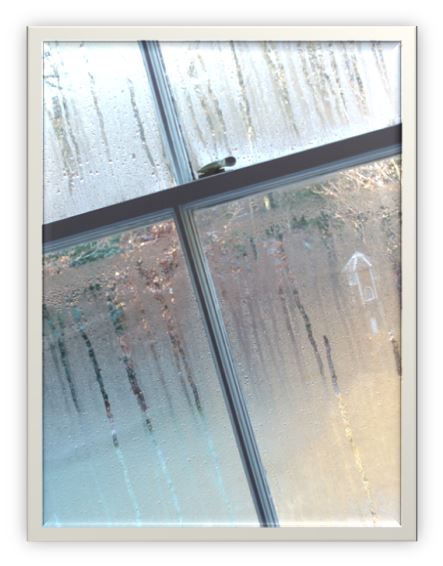
Condensation is the result of high humidity that produces a “fog” once it hits a colder surface. The humidity is caused by excess water vapor in the home. This is commonly seen in a foggy mirror after a hot shower. Condensation usually occurs first on windows because glass surfaces have the lowest temperature of any of the interior surfaces in the home.

A little condensation on the lower corners of your windows now and then probably doesn’t bother you and shouldn’t. By the time you’ve thought about it a second time it has usually gone.

What we’re talking about is excessive condensation, condensation that runs down the windows and pools on the sills, condensation that runs off windows and stains woodwork… or in serious cases even damages the walls and possibly the floors.

If you have this kind of condensation on your windows, you have a good reason to worry and a good reason to act.

It’s natural and easy in such cases to blame the builder or the windows. But it’s wrong to blame them.

The real villain is invisible. Its water vapor…too much water vapor. The best and usually the ONLY way to prevent this trouble is to get rid of excess water vapor.

If you have too much water vapor (humidity) in your home there isn’t anything you can do to the windows to stop condensation.

What is Humidity?

Humidity, water vapor, moisture, steam, they’re all the same. They’re all a form of water.  Humidity is an invisible gas. It’s present in varying quantities in nearly all air. This moisture in wet air tries to flow toward drier air and mix with it to reach equilibrium.

Scientists describe the movement of water vapor as “vapor pressure’.  It’s often a very powerful force indeed.  It can act independently of the flow of the air, which holds the moisture.  Vapor pressure can force moisture easily through wood, drywall, cement and brick. Right through most of the materials we use to build our homes. That’s exactly what happens when moisture seeks to escape from the humid air.  The moisture is moving from an area of greater concentration to an area of lesser concentration. 

Here in Florida, the hot humid south, the area of greater concentration is generally the exterior of the home.  However during the winter the opposite is true.  During the winter the exterior is dryer than the interior of your home.  In addition you aren’t running the air conditioner which during the summer removes some of the indoor water vapor from the air.

So we have the same daily activities in the winter as the summer.  We’re creating the same amount of water vapor but we’re not removing any of water vapor.  So in the winter the humidity in our homes rises and the outdoor temperature and humidity lowers.  And the result is condensation on your windows.  The amount of condensation will be directly related to the amount of available water vapor or amount of indoor relative humidity.

Daily occupant activity such as cooking, washing, bathing, showers, as well as the use of household appliances such as dishwashers and clothes dryers and washing machines, all introduce water vapor into homes.  Typical amounts of water vapor include:

  • One person’s breathing produces 1/4 cup of water per hour.
  • Cooking for a family of four produces approximately 5 pints of water in 24 hours.
  • Showering puts 1/2 pint of water into the air.
  • Bathing puts 1/8 pint of water into the air.

Adding only four to six pints of water to the air raises the relative humidity in a 1,000 square foot home from 15 to 60 percent, assuming the temperature is constant.

So you see that the modern family of four can easily release 150 pounds or more than 18 GALLONS of water per week into the air in their home! 

Old drafty windows allow moisture to escape through inefficient seals and cracks. Today’s technology produces more energy efficient, “tighter” homes. This is great for keeping your home more comfortable, quieter, and cleaner, BUT by sealing your home you are also keeping moisture in. In today’s homes it is very easy to build up extremely high levels of humidity.

Since the 1970’s energy crisis we’ve been working very hard to create an energy efficient home.  Part of that energy efficiency is to prevent air infiltration by sealing homes which has created the modern “tight” home. Moisture created by bathrooms, kitchens, laundry rooms and daily occupant activity no longer flows easily to the outside. Modern insulation and construction that keep the hot and cold air outside also keep moisture in; so, it is very easy to build up excessive and even harmful moisture levels in our homes. The condensation is a big red flag that you have way too much humidity trapped in your home.

How to Reduce Humidity

Be the Master of your Domain and take control of your indoor environment: For instance, venting all bath vents, clothes dryers, kitchen exhaust hoods to the exterior of your home.  And of course you have to use your kitchen or bathroom exhaust fans.  We strongly encourage you to consider purchasing or upgrading to bathroom exhaust fans that are humidity controlled.  That’s right started and stopped automatically based on the amount of humidity in the bathroom.

Now, before we summarize specific steps for reducing humidity in your home, let’s include some basic data about recommended indoor relative humidity. You can refer to it if you are inclined to test the moisture levels in your own home.

Here are a few easy steps you can take to reduce condensation on your windows.

  1. Install a humidistat
  2. Do not install wallpaper on exterior or bathroom walls
  3. Do not place furniture in front of windows. 
  4. Do not keep window coverings such as curtains and blinds fully closed
  5. Ensure that your bathroom exhaust fan is ducted to the exterior of your home
  6. Run your bathroom exhaust fan
  7. Run your bath exhaust fan some more
  8. If possible duct your kitchen exhaust fan to the exterior
  9. Run your kitchen exhaust fan while cooking

10. Ensure that your dryer vent is clean

You see, the basic principle of reducing window condensation is extremely simple. When there is too much condensation on your windows, it means that humidity is too high in your home. You should take necessary steps to reduce humidity until condensation disappears.

While we have been discussing the control of condensation we’ve mentioned just about everything except windows. There’s a good reason.

There just is nothing much that can be done with windows to cut down condensation. As the building experts have often pointed out, the windows are not to blame for condensation. In the moisture content of the inside air, lies both the cause and the cure.

John Lapotaire, CIEC

Florida Indoor Air Quality Solutions IAQS

www.FloridaIAQ.com


Mold Humidity Bloom

April 2, 2013

Florida Humidity Bloom Florida Indoor Air Quality Solutions IAQS

Florida Humidity Bloom Florida Indoor Air Quality Solutions IAQS

A humidity bloom is the growth of mold within a living space due to the elevation of indoor relative humidity at or above 60 percent relative humidity for a period of time greater than 72 hours and must be maintained for growth to continue.  When the humidity is above 60 percent relative humidity, molds will germinate causing what is referred to as a mold bloom.   These molds can bloom in many colors and are often confused with dust, dirt, foxing, or cobwebs.

Humidity for an extended period of time, typically in excess of 72 hours to initiate the bloom and must be maintained for growth to continue.  When the humidity is above 60 percent relative humidity, molds will germinate causing what is referred to as a mold bloom.   These molds can bloom in many colors and are often confused with dust, dirt, foxing, ghosting, or cobwebs.

Both active and inactive mold can have a distinctive smell, which most people describe as musty.

  • Active mold in the early stages of a bloom has hair-like filaments in webs, which develop a more bushy appearance as the bloom matures. This is more easily seen under magnification. Active mold is soft and may smear when touched with a fine brush. It may also be slimy and damp.
  • Inactive mold is dry and powdery and will seem to brush off materials readily.

Mold and mildew are words that refer to more than 100,000 species of fungi. Mold spores are present everywhere in our environment, generally in a dormant state where they do little damage. Spores require moisture to become active. They do not require light.

When water or high relative humidity provides the necessary moisture, dormant spores will germinate, grow fine web-like structures, and eventually produce fruiting bodies that release more spores. Most molds will germinate at 60 percent relative humidity. Increases in temperature can speed the growth rate of active mold.

There are 4 critical requirements for mold growth – available mold spores, available mold food, appropriate temperatures and considerable moisture. The removal of any one of these items will prohibit mold growth.

The only way to reduce the threat of mold in a home is to maintain an environment that is not hospitable for the germination of mold spores. The temperature should be 74-78 degrees F, and the relative humidity of 60% or less. It is important that the air conditioning system (HVAC) be kept on 24 hours a day, 7 days a week. Inconsistent operation or fluctuations in the temperature and humidity are the cause of many serious mold outbreaks.

Humidity

Humidity is simply vaporized water in the air. Your breath contains hundreds of droplets of invisible water vapor. You can see them when you breathe on a pair of cold glasses.

The term most often used to define the amount of water vapor in the air is “relative humidity.” Relative humidity is the percentage of water vapor in the air at a specific temperature, compared to the amount of water vapor the air is capable of holding at that temperature. Warm air holds more water vapor than cold air. When air at a certain temperature contains all the water vapor it can hold at that temperature, its relative humidity is 100 percent. If it contains only half the water vapor it is capable of holding at that temperature, the relative humidity is 50 percent.

If the outside air temperature in winter is 0°F and the relative humidity is 75 percent, that same air inside your 70°F home will have a four percent relative humidity. The Sahara Desert has an average relative humidity of 25 percent.

When air is saturated with water vapor, it has reached the dew point; at this point, water vapor condenses and produces visible water or “condensation.” In winter it usually occurs first on windows. When warm, moist air comes in contact with a cold window, air temperature drops and it can no longer hold the water vapor; condensation results.

Desirable Humidity Levels

The human body is comfortable when relative humidity ranges between 20 and 60 percent. In your home, an average relative humidity of 35 to 40 percent is appropriate when the outside temperature is 20°F or above. However, during cold weather, higher humidity ranges may cause structural damage because of condensation on windows and on the inside of exterior walls. As outdoor temperatures fall, condensation problems inside may develop.

The construction of a home also influences how much humidity is desirable. Tightly constructed buildings with properly installed vapor barriers and tight fitting doors and windows retain more heat and moisture. This is where mechanical ventilation becomes important. If a home does not have the proper mechanical ventilation, excess water vapor can move through walls and ceilings, causing wet insulation, peeling paint, and mold on walls and woodwork.

The following table shows recommended indoor humidity levels in relation to outdoor temperatures.

Outside temperature (0°F)

Recommended relative humidity

+20° and above

35% to 40%

+10°

30%

25%

-10°

20%

-20°

15%

Maintaining relative humidity below 50% inhibits mold and mildew growth, dust mite infestations, and bacteria. This lower relative humidity also reduces the out-gassing of volatile organic compounds (VOC’s). Molds are incapable of obtaining the moisture needed for their development directly from the atmosphere, but they can obtain it from a substrate, which has absorbed moisture from moist air (60% to 100% relative humidity). The relative humidity of the air has an indirect effect on fungal growth, and the more hygroscopic a material is, the more susceptible it is to mold growth. The minimum moisture content at which mold growth occurs depends on the material and usually ranges from 10% to 14%. Suitable substrates include carpet fibers, gypsum, concrete, bricks, etc.

Mold spores are everywhere all the time, entering from outdoor air as well as on pets and clothing. A mold spore landing on an indoor surface is likely to be insignificant and amount to little more than a common component of indoor dust, until such a mold spore lands on a moist organic surface (such as drywall.) High indoor humidity causes the surface moisture level to be sufficient for mold sporulation.  Since a mold spore requires moisture to propagate and grow, the indoor humidity level is a key gating factor in the control of indoor mold (and dust mites) in buildings.

Certain common mold genera and species, such as some members of the Aspergillus sp. and others grow readily on common building materials if they also have enough moisture. While there are fungal species that are able to grow under a remarkably wide range of environmental conditions, keeping indoor humidity at the appropriate level will reduce the chances of growth of the most common indoor problem molds.

High indoor humidity can encourage more issues than indoor mold. The same moisture conditions that support growth of problematic indoor molds also encourage the development of bacterial hazards, dust mite populations, mite fecal allergen problem, and possibly other insect problems in buildings.

The same measures of humidity control to prevent mold growth are needed to discourage the dust mite population that exists in all living areas. Measures including choosing and maintaining the proper humidity level to avoid indoor mold will also work to minimize the level of dust mites and dust mite allergens.

Keep the indoor humidity level in the mid-comfort range. A maximum indoor relative humidity of 50% RH may be acceptable, 45% RH better. At 60% indoor RH, we’re entering the indoor mold-formation risk zone of high interior moisture in building wall or ceiling cavities or on wall and floor surfaces, possibly conducive to mold growth.

John Lapotaire, CIEC

Indoor Air Quality Solutions, IAQS

http://www.FloridaIAQ.com


Mold Scams. Is anything really Free???

July 18, 2012

ImageMore often than not, free comes with a hefty price that ends up costing far more than you thought it would and never has that been truer than in the mold business.

The safest thing consumers can do whenever the word “FREE” is used to sell a mold remediation job is to avoid that contractor all together. Think about it. No one is in business to do anything for free. Anyone offering something for free is doing so to sell you something else. While that may be fine when it comes to “buy one – get one free” deals offered on TV infomercials, in the mold business a free inspections and testing can end up costing you thousands of dollars for remediation work that may be grossly exaggerated or in some cases doesn’t need to be done at all.

The biggest mold scam is and always has been – mold remediation contractors who perform “FREE” mold inspections. When it comes to mold, you do NOT want a mold inspector who is motivated to find mold removal jobs for themselves.

Mold remediation is a very profitable business and engaging in both mold inspections and mold remediation is a serious conflict of interest. The potential for fraudulently creating thousands of dollars in bogus and unnecessary mold remediation work is tremendous and – unfortunately – an everyday occurrence in this industry.

This fraudulent practice of the mold remediation contractor securing work by providing “FREE” mold inspections then offering to remediate the mold is against the Law in the State of Florida.

Your Mold Remediator and Mold Inspector MUST be Licensed by the State of Florida. Under the Florida Licensing Law the Mold Remediator Cannot perform Mold Remediation on any job that he or she has performed the Mold Inspection.

This is the oldest mold scam in the mold remediation and restoration industry and it’s easy to pull off because most consumers don’t know enough about mold to realize when they’re being bamboozled into work that is often grossly exaggerated, and in some instances, not even necessary.

Beware of the mold remediation contractor that offers “Free” Mold Inspections and uses terms such as “Black Mold”, “Toxic Mold”, or “Toxic Black Mold”.

Those terms are a clear indication that the mold remediation contractor providing the “Free Mold Inspection” is using scare tactics to convince you that you need the mold remediation work for your immediate safety.  Not likely. 

To establish the presence of mycotoxins in any indoor environment the Licensed Mold Assessor would need to collect samples that would identify the species of mold.  This cannot be accomplished with the collection of spore trap samples.  The spore trap samples will only provide mold spore identification to the genus not the species.  Or feline if you will and not house cat vs. Bengal tiger, Genus vs. species.

To identify the species of mold the Licensed Mold Assessor would need to collect either culturable (viable or living) or PCR samples. 

Culturable must be collected using a pump, impactor, and agar plates. These samples are then sent to the laboratory and take time to grow and are more expensive than mold spore trap samples.

PCR, Polymerase Chain Reaction, is used to detect the DNA of the spore and is collected using a pump and a 3-piece PCR air-sampling cassette.  PCR is even more expensive than the mold cultures and spore traps combined, but they are much faster than waiting for the culturable samples to grow. 

It gets even more expensive when you realize that now that you’ve identified the mold in the indoor environment as a species that MAY produce mycotoxins you now have to determine if the potentially mycotoxin producing mold species actually produced any mycotoxins in the indoor environment being sampled. Whew!

Yes it takes much more than a “FREE Mold Inspection” to establish that you home or office has a mold that produced mycotoxins.  It’s more likely that the mold remediation contractor offering the “FREE Mold Inspection” and using terms like “Black Mold”, “Toxic Mold”, or “Toxic Black Mold” is just trying to scare you into more mold remediation than you actually need.

No indoor environmental professional would ever use those term, ever!  If they are being used you are being played.  Ask the individual to stop using unprofessional scare tactics and leave.

Remember, Convenience Can Cost You.
Most people prefer to deal with one contractor for everything because it’s convenient. But when it comes to mold that convenience can end up costing you thousands of dollars in unnecessary repair work. There are enough reputable and Florida State Licensed Mold Inspectors who do not engage in remediation work to risk getting ripped off.

Remember a mold inspection should be completely unbiased. Mold inspectors should have no personal interest in how an inspection turns out, nor should they ever profit from what they find, either directly by doing the removal themselves, or indirectly by referring work to their friends for a kick-back.

The only way to ensure you will get an unbiased inspection report and avoid this mold scam is to hire a Florida State Licensed Mold Inspector who does not perform mold remediation.  And always ask if they will be following the ANSI Approved S-520.

The S-520 Standard and Reference Guide for Professional Mold Remediation is procedural standard and reference guide for the remediation of mold damaged structures and contents. The S-520 is based on reliable remediation and restoration principles, research and practical experience.

The S520 provides a philosophical shift away from setting numerical mold contamination action levels. Instead, it establishes mold contamination definitions, descriptions and conditions (1, 2, 3), and general guidance, which, when properly applied, can assist remediators and others in determining criteria that trigger remediation activities or confirm remediation success.

Contaminated as the presence of indoor mold growth and/or spores, whose identity, location and amplification are not reflective of a normal fungal ecology for an indoor environment, and which may produce adverse health effects and cause damage to materials, and adversely affect the operation or function of building systems.

Condition 1 (normal ecology) – may have settled spores, fungal fragments or traces of actual growth whose identity, location and quantity is reflective of a normal fungal ecology for an indoor environment.

Condition 2 (settled spores) – an indoor environment which is primarily contaminated with settled spores that were dispersed directly or indirectly from a Condition 3 area, and which may have traces of actual growth.

Condition 3 (actual growth) – an indoor environment contaminated with the presence of actual growth and associated spores. Actual growth includes growth that is active or dormant, visible or hidden.


  • John P. Lapotaire, CIEC
  • Certified Indoor Environmental Consultant
  • Microshield Environmental Services, LLC
  • www.Microshield-ES.com

The Design Build Industry vs. The Remediation Industry

May 8, 2012

The oversight elements of the design build process that most fail to recognize, and are somewhat equivalent to the separation between assessment and remediation, are as follows. (That is unless you are in a state that requires nothing to build a home.)

Plan Review and Permit Application (Design Build Oversight pre-construction)

First and well before you actually begin bending nails, you will need either a Licensed Architect or a Licensed Engineer to review and approve your design before you can proceed to the next step.

You’ll then need to submit your plans to the City Building Department where the plans will again be reviewed and approved before you can proceed to the next step.

That alone eliminates any comparison between the unlicensed mold assessors providing an assessment on a home that he intends to remediate.

At this point and again well before you start bending nails the city will require most if not all of the following:

• Completed building permit application
• Site plan
• Footing plan
• Foundation plan
• Floor Plan
• Building Elevations
• Header schedule
• Framing Plan
• Truss and structural specifications
• Plumbing, Electrical and Mechanical Plans
• Engineered Septic plan
• Window and Door schedule
• Manufacturer’s Installation Procedures
• Energy Compliance Calculations

I pulled that list up from City of Rome just to provide an example of the hoops a design build contractor must jump through prior to the actual construction of the design build project.

The equivalent of the Mold Assessment.

Once you actually receive the Building Permit you must then receive the necessary inspections that are required.

Residential Inspection Schedule (Design Build Oversight during construction)
All applicable inspections listed below are mandatory and must be completed by a City of Rome Building Inspector prior to use or occupancy.

  1. FOOTINGS / POSTS
  2. FOUNDATION / PERIMETER DRAINS
  3. CONCRETE / UNDER SLAB
  4. ROUGH IN ELECTRICAL
  5. ROUGH IN PLUMBING
  6. FRAMING
  7. CHIMNEYS & FIREPLACES
  8. INSULATION
  9. FIRE SEPARATION
  10. BUILDING SYSTEMS
  11. FINAL ELECTRICAL & PLUMBING INSPECTIONS
  12. FINAL BUILDING INSPECTION
    Smoke Detector / Carbon Monoxide Detectors
    Interior and Exterior coverings in place
    Windows and doors operational.
    Railing / staircases / landings in place
    All mechanical systems operational
    911 House Number in Place

The equivalent of the Post Remediation Verification Inspection (Design Build Oversight post-construction)

There is one hell of a lot of oversight involved in the Design Build industry and unless there is separation between assessment and remediation there are none thats right 0 in the Mold industry.

The comparison between the Design Build industry and the Mold Remediation industry, Not a fair apples to apples comparison of industries or industry oversight.

The Mold Remediation industry would require only 2 points of oversight.

  1. The Independent Mold Assessment prior to mold remediation (Mold Remediation Oversight pre-remediation)
    Here in Florida by a State Licensed Mold Assessor when the mold affected area is greater than 10 square feet. The Mold Remediator cannot perform or offer to perform any mold remediation to a structure on which the mold remediation or the mold remediation’s company provided a mold assessment within the last 12 months.
  2. And the Independent Post Remediation Verification Inspection after mold remediation (Mold Remediation Oversight post-remediation)
    Here in Florida by a State Licensed Mold Assessor that cannot perform or offer to perform any mold assessment to a structure on which the mold assessor or the mold assessors company provided mold remediation within the last 12 months.

It just seems to be much easier than many want to make it out to be.

History and experience tell me that the remediator who skips the initial step of an assessment from a licensed assessor usually finds it just as easy to skip other steps durring remediation and usually also skip the last step of independent post remediation verification from a licensed assessor.

• John P. Lapotaire, CIEC

• Certified Indoor Environmental Consultant
• Microshield Environmental Services, LLC
www.Microshield-ES.com


IICRC board of directors votes to return to original name “The IICRC!”

March 19, 2012

The Institute of Inspection, Cleaning and Restoration Certification (IICRC) announced today that the Board of Directors has voted to return the formal name of the organization to the IICRC, keeping cleantrust as the service mark of the organization. The full details surrounding the transition will be announced at the Certification Council on April 22, 2012.

“We’ve heard the feedback from registrants over the past few months and considered many options,” said IICRC Chairman Darrell Paulson. “Ultimately, the board has decided to use the IICRC as the main brand and use the cleantrust as a service mark. This allows us to honor the 40-year history of our organization, while also working to gain more awareness with end-users. We are still working through all of the details and we thank the inspection, cleaning and restoration community for their patience during this process.”

The IICRC will retain the use of the updated logo, which represents the strength and breadth of the organization. The shape reflects a globe, symbolizing the IICRC’s international status. And like the organization, the logo is made up of many different parts that are working together in a unified pattern, depicting an organization that is deep in knowledge.

“Together, this powerful brand combination of IICRC and the cleantrust, will enable us to constantly work towards our mission of identifying and promoting an international standard of care that establishes and maintains the health, safety and welfare of the built environment,” said Paulson.

Updated materials with the new IICRC logo and an updated design will gradually rollout in the coming months, including ID cards, brochures, introductory video and a new website.

• John P. Lapotaire, CIEC
• Certified Indoor Environmental Consultant
• Microshield Environmental Services, LLC
www.Microshield-ES.com


Does the Home you want to rent have Hidden IAQ Indoor Air Quality Issues?

March 13, 2012

Microshield IAQ Landlord TenantIn today’s volatile and uncertain real estate market, many Florida families who would otherwise purchase a home are now turning to renting homes, condos, and apartments. For many, renting provides them the opportunity to rebound from their own dad real estate experience and for others it’s an opportunity to move into a property when the market is uncertain and financing may not be readily available.

It’s important for potential tenants to do their homework with regards to potential indoor environmental concerns at a property they are considering renting. This may include talking with the landlord, researching the building’s prior use and hiring an IEP Indoor Environmental Professional to perform an Indoor Environmental Assessment.


If you are in the market for a new rental home ask questions.  Landlords are bound to deal truthfully when discussing the property and any past issues.  Ask the Landlord about issues dealing with past leaks, flooding events, mold, sewage contamination, asbestos, lead, radon and vapor intrusion issues.

These questions and answers are all part of the IEP’s interview and will be a part of the written report you will receive if you decide to hire an IEP.  If you decide that you are ready to hire an IEP there are questions that you should ask to ensure you are receiving the best possible assessment of your family’s new home.

A professionally prepared Indoor Environmental or Indoor Air Quality Report should clearly answer the following questions:

  1. Is there an Indoor Environmental or Indoor Air Quality Concern in your home?
  2. What is the cause?
  3. Where is the source?
  4. What containment and cleaning is needed?
  5. What home repairs are needed to prevent future problems?

If you suspect that there is an indoor air problem in the home or office involving any unknown Allergens, Asthma Triggers, or Mold, in addition to the visual assessment of your home you may also need to know the following:

  1. Is Indoor Environmental Sampling Necessary?
  2. If Sampling is necessary why?
  3. Where? And
  4. Which Type of Sampling is recommended?

The Visual Inspection should provide a Sampling Plan specific to the findings in your home or office so you can then determine;

  1. If there is a mold, allergen, asthma trigger, or similar environmental problem in the home or office?
  2. If there is a problem, where is it and how big is it?
  3. What does the lab work indicate about the level of risk to occupants or workers?
  4. Are we looking at a “cosmetic-only” concern?
  5. What is the extent of remediation or cleaning necessary, and
  6. based on the lab results, what is the level of containment and care needed?
  7. What needs to be changed or repaired on the home or office so that problems don’t recur? And
  8. after the cleanup has been completed, was it proper and complete?

A professionally prepared Indoor Environmental Assessment should also an education on the 7 Seven Principles of Healthy Homes

Dry: Damp houses provide a nurturing environment for mites, roaches, rodents, and molds, all of which are associated with asthma.

Clean: Clean homes help reduce pest infestations and exposure to contaminants.

Pest-Free: Recent studies show a causal relationship between exposure to mice and cockroaches and asthma episodes in children; yet inappropriate treatment for pest infestations can exacerbate health problems, since pesticide residues in homes pose risks for neurological damage and cancer.

Safe: The majority of injuries among children occur in the home. Falls are the most frequent cause of residential injuries to children, followed by injuries from objects in the home, burns, and poisonings.

Contaminant-Free: Chemical exposures include lead, radon, pesticides, volatile organic compounds, and environmental tobacco smoke. Exposures to asbestos particles, radon gas, carbon monoxide, and second-hand tobacco smoke are far higher indoors than outside.

Ventilated: Studies show that increasing the fresh air supply in a home improves respiratory health.

Maintained: Poorly-maintained homes are at risk for moisture and pest problems. Deteriorated lead-based paint in older housing is the primary cause of lead poisoning, which affects some 240,000 U.S. children.

• John P. Lapotaire, CIEC
• Certified Indoor Environmental Consultant
• Microshield Environmental Services, LLC
www.Microshield-ES.com


Who’s Required to have a Florida Mold License?

March 13, 2012

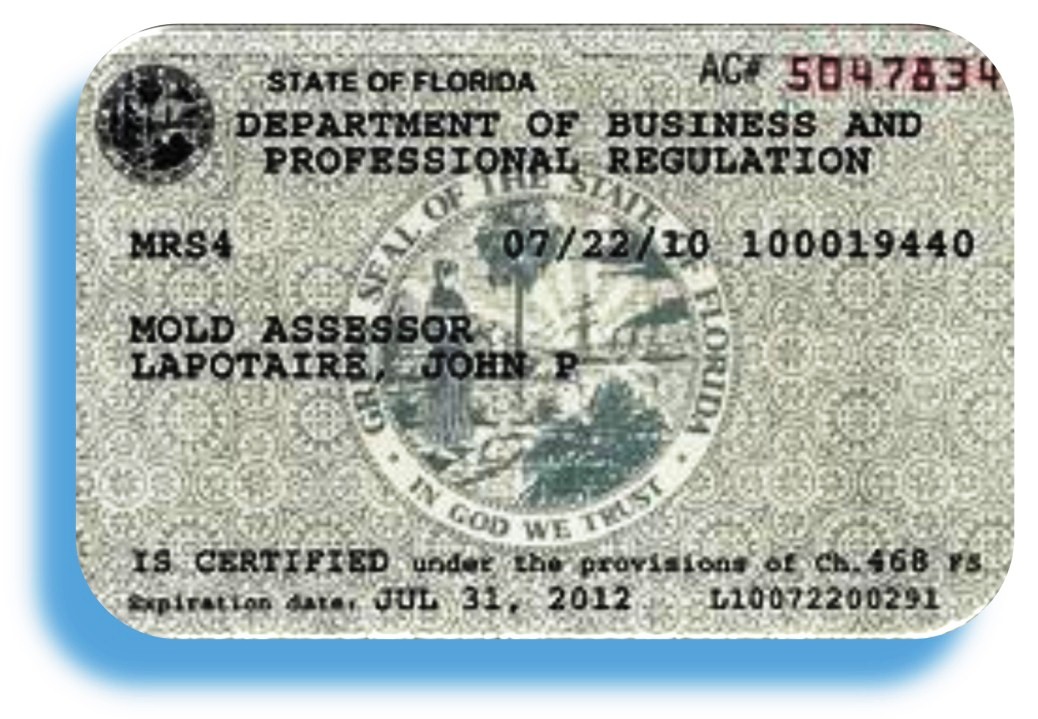
John Lapotaire CIEC Florida Licensed Mold AssessorI am often asked who in the State of Florida needs a license to preform Mold Assessments and/or Mold Remediation. At the top of the list are General Contractors, Home Inspectors, Duct Cleaners, and Air Conditioning Contractors.

Let’s start with why the state decided to require a license?

The Florida Legislature finds it necessary in the interest of the public safety and welfare, to prevent damage to real and personal property, to avert economic injury to the residents of this state, and to regulate persons and companies that hold themselves out to the public as qualified to perform mold-related services.

Now let’s get to the individuals that believe they don’t require a mold license.  First home inspectors and the answer is yes, a home inspector requires a mold assessor’s license to conduct a mold inspection and yes the collection of samples to identify the presence of mold requires a mold assessor’s license.

As for the duct cleaners and air conditioning contractors, the answer is also yes.  Anyone removing or identifying mold in a home or business requires a mold assessment or mold remediation license and that includes those in the air conditioning and duct cleaning business.

There are exceptions to the law and those are listed below. Which brings us to the general contractor?  Does the GC need a mold license? No. As the law currently states the prohibitions in the law do not apply to a Division 1 contractor as stated below.

468.8419 Prohibitions; penalties.—

(1) A person may not:

(d) Perform or offer to perform any mold assessment to a structure on which the mold remediator or the mold remediator’s company provided a mold remediation within the last 12 months. This paragraph does not apply to a certified contractor who is classified in s. 489.105(3) as a Division I contractor. However, the department may adopt rules requiring that, if such contractor performs the mold remediation and offers to perform the mold assessment, the contract for mold assessment provided to the homeowner disclose that he or she has the right to request competitive bids.

(d) Perform or offer to perform any mold remediation to a structure on which the mold assessor or the mold assessor’s company provided a mold assessment within the last 12 months. This paragraph does not apply to a certified contractor who is classified in s. 489.105(3) as a Division I contractor. However, the department may adopt rules requiring that, if such contractor performs the mold assessment and offers to perform the mold remediation, the contract for mold remediation provided to the homeowner disclose that he or she has the right to request competitive bids.

You may want to ensure that your GC is actually trained in Mold Assessment or Mold Remediation before you hire him. Currently the law requires nothing in the form of mold assessment or mold remediation training for a GC.

A Florida Licensed Mold Assessor or Mold Remediator must first take and pass one of the examinations approved by the department and administered by the American Council for Accredited Certification (ACAC).

The ACAC has certifications for both the Assessor and Remediator, such as the CIEC Council-certified Indoor Environmental Consultant Required: 8 years’ experience consulting on indoor environmental issues including asbestos, lead, HVAC, building science, chemicals, mold and microbial contamination, or the CMC Council-certified Microbial Consultant Required: 8 years’ experience in designing and conducting microbial sampling regimens, or the CMRS Council-certified Microbial Remediation Supervisor Required: 5 years’ experience remediating microbial issues in the indoor environment, and the CMR Council-certified Microbial Remediator Required: 2 years, experience remediating microbial issues in the indoor environment.

I would much prefer that my Mold Assessor or Mold Remediator be Licensed by the state and have the ACAC qualifications.

Mold assessment is a process performed by a mold assessor that includes the physical sampling and detailed evaluation of data obtained from a building history and inspection to formulate an initial hypothesis about the origin, identity, location, and extent of amplification of mold growth of greater than 10 square feet.

Mold remediation is the removal, cleaning, sanitizing, demolition, or other treatment, including preventive activities, of mold or mold-contaminated matter of greater than 10 square feet that was not purposely grown at that location; however, such removal, cleaning, sanitizing, demolition, or other treatment, including preventive activities, may not be work that requires a license under Chapter 489, Florida Statutes, unless performed by a person who is licensed under that chapter or the work complies with that chapter.

These items are offered as examples of services you do need to hire a person with a Florida license and services you do not need to hire a person with a Florida license. The list is not all inclusive. If you have specific questions, please contact the department at 850.487.1395 or review the rules for the profession at www.myfloridalicense.com. You should also check with your county or city to learn whether or not a local business tax receipt or certificate of competency is required for services that do not require a state license. Please visit our Unlicensed Activity page to learn more about how you can help us combat Unlicensed Activity.

Needs a License Does not need a License
Advertising or representing oneself to be a Mold Assessor or Remediator. A residential property owner who performs mold assessment on his or her own property.
Taking samples for purposes of testing for the presence of mold. A person who performs mold assessment on property owned or leased by the person, the person’s employer, or an entity affiliated with the person’s employer through common ownership. This exemption does not apply if the person, employer, or affiliated entity engages in the business of performing mold assessment for the public.
A person who performs mold assessment on property operated or managed by the person’s employer or an entity affiliated with the person’s employer through common ownership. This exemption does not apply if the person, employer, or affiliated entity engages in the business of performing mold assessment for the public.
A person working solely as an officer or employee of a governmental entity.


Here are some Florida Mold License FAQ’s Frequently Asked Questions and Answers.

What are the statutes and rules that govern the mold-related services Profession?

Chapter 468, Part XVI of the Florida Statutes and Rule 61-31 of the Florida Administrative Code.

What are the statutes and rules that govern the Home Inspection Profession?

Chapter 468 Part XV of the Florida Statutes and Rule 61-30 of the Florida Administrative Code.

Where can I obtain the laws and rules of the profession?

The laws and rules may be obtained on the website at http://www.MyFloridaLicense.com > Our Businesses & Professions > the license you are looking for > Statutes and Rules.

If you need further assistance, you may call the Customer Contact Center at 850.487.1395.

If my company does both Mold Assessments and Mold Remediations, will I be required to get two (2) licenses (one for Mold Assessor and one for Mold Remediator?

Yes, in addition, please note Section 468.8419(1)(d), F.S., provides that an assessor may not “perform or offer to perform any remediation to a structure on which the mold assessor or the assessor’s company provided a mold assessment within the last 12 months.” Section 468.8419(2)(d), F.S., provides that a remediator may not “perform or offer to perform any assessment to a structure on which the mold remediator or the remediator’s company provided a mold remediation within the last 12 months.”

Will there be additional requirements by DBPR to have an “applicators” license if the mold remediator applies chemicals to contaminated surfaces during a remediation?

No, please see the definition of remediators as it allows the remediator to treat and do preventive activities.

Is there a provision that would allow those licensed by the Construction Industry Licensing Board (CILB) to perform mold related services as long as they stay within the scope of their current licenses?

Yes, Section 468.841 F.S., exempts persons from the provisions of Chapter 468, Part XVI, when acting within their authorized scope of practice as licensed under Federal, state or local codes or statutes. Any person acting on this exemption must not hold himself or herself out for hire as a licensed assessor or remediator or any title implying licensure under Chapter 468, Part XVI.

468.8419 Prohibitions; penalties.—

(1) A person may not:

(a) Effective July 1, 2011, perform or offer to perform any mold assessment unless the mold assessor has documented training in water, mold, and respiratory protection under s. 468.8414(2).

(b) Effective July 1, 2011, perform or offer to perform any mold assessment unless the person has complied with the provisions of this part.

(c) Use the name or title “certified mold assessor,” “registered mold assessor,” “licensed mold assessor,” “mold assessor,” “professional mold assessor,” or any combination thereof unless the person has complied with the provisions of this part.

(d) Perform or offer to perform any mold remediation to a structure on which the mold assessor or the mold assessor’s company provided a mold assessment within the last 12 months. This paragraph does not apply to a certified contractor who is classified in s. 489.105(3) as a Division I contractor. However, the department may adopt rules requiring that, if such contractor performs the mold assessment and offers to perform the mold remediation, the contract for mold remediation provided to the homeowner disclose that he or she has the right to request competitive bids.

(e) Inspect for a fee any property in which the assessor or the assessor’s company has any financial or transfer interest.

(f) Accept any compensation, inducement, or reward from a mold remediator or mold remediator’s company for the referral of any business to the mold remediator or the mold remediator’s company.

(g) Offer any compensation, inducement, or reward to a mold remediator or mold remediator’s company for the referral of any business from the mold remediator or the mold remediator’s company.

(h) Accept an engagement to make an omission of the assessment or conduct an assessment in which the assessment itself, or the fee payable for the assessment, is contingent upon the conclusions of the assessment.

(2) A mold remediator, a company that employs a mold remediator, or a company that is controlled by a company that also has a financial interest in a company employing a mold remediator may not:

(a) Perform or offer to perform any mold remediation unless the remediator has documented training in water, mold, and respiratory protection under s. 468.8414(2).

(b) Perform or offer to perform any mold remediation unless the person has complied with the provisions of this part.

(c) Use the name or title “certified mold remediator,” “registered mold remediator,” “licensed mold remediator,” “mold remediator,” “professional mold remediator,” or any combination thereof unless the person has complied with the provisions of this part.

(d) Perform or offer to perform any mold assessment to a structure on which the mold remediator or the mold remediator’s company provided a mold remediation within the last 12 months. This paragraph does not apply to a certified contractor who is classified in s. 489.105(3) as a Division I contractor. However, the department may adopt rules requiring that, if such contractor performs the mold remediation and offers to perform the mold assessment, the contract for mold assessment provided to the homeowner disclose that he or she has the right to request competitive bids.

(e) Remediate for a fee any property in which the mold remediator or the mold remediator’s company has any financial or transfer interest.

(f) Accept any compensation, inducement, or reward from a mold assessor or mold assessor’s company for the referral of any business from the mold assessor or the mold assessor’s company.

(g) Offer any compensation, inducement, or reward to a mold assessor or mold assessor’s company for the referral of any business from the mold assessor or the mold assessor’s company.

(3) Any person who violates any provision of this section commits:

(a) A misdemeanor of the second degree for a first violation, punishable as provided in s. 775.082 or s. 775.083.

(b) A misdemeanor of the first degree for a second violation, punishable as provided in s. 775.082 or s. 775.083.

(c) A felony of the third degree for a third or subsequent violation, punishable as provided in s. 775.082, s. 775.083, or s. 775.084.


468.841 Exemptions.—

(1) The following persons are not required to comply with any provisions of this part relating to mold assessment:

(a) A residential property owner who performs mold assessment on his or her own property.

(b) A person who performs mold assessment on property owned or leased by the person, the person’s employer, or an entity affiliated with the person’s employer through common ownership, or on property operated or managed by the person’s employer or an entity affiliated with the person’s employer through common ownership. This exemption does not apply if the person, employer, or affiliated entity engages in the business of performing mold assessment for the public.

(c) An employee of a mold assessor while directly supervised by the mold assessor.

(d) Persons or business organizations acting within the scope of the respective licenses required under part XV of this chapter, chapter 471, part I of chapter 481, chapter 482, or chapter 489 1are acting on behalf of an insurer under part VI of chapter 626, or are persons in the manufactured housing industry who are licensed under chapter 320, except when any such persons or business organizations hold themselves out for hire to the public as a “certified mold assessor,” “registered mold assessor,” “licensed mold assessor,” “mold assessor,” “professional mold assessor,” or any combination thereof stating or implying licensure under this part.

(e) An authorized employee of the United States, this state, or any municipality, county, or other political subdivision, or public or private school and who is conducting mold assessment within the scope of that employment, as long as the employee does not hold out for hire to the general public or otherwise engage in mold assessment.

(2) The following persons are not required to comply with any provisions of this part relating to mold remediation:

(a) A residential property owner who performs mold remediation on his or her own property.

(b) A person who performs mold remediation on property owned or leased by the person, the person’s employer, or an entity affiliated with the person’s employer through common ownership, or on property operated or managed by the person’s employer or an entity affiliated with the person’s employer through common ownership. This exemption does not apply if the person, employer, or affiliated entity engages in the business of performing mold remediation for the public.

(c) An employee of a mold remediator while directly supervised by the mold remediator.

(d) Persons or business organizations that are acting within the scope of the respective licenses required under chapter 471, part I of chapter 481, chapter 482, chapter 489, or part XV of this chapter, are acting on behalf of an insurer under part VI of chapter 626, or are persons in the manufactured housing industry who are licensed under chapter 320, except when any such persons or business organizations hold themselves out for hire to the public as a “certified mold remediator,” “registered mold remediator,” “licensed mold remediator,” “mold remediator,” “professional mold remediator,” or any combination thereof stating or implying licensure under this part.

(e) An authorized employee of the United States, this state, or any municipality, county, or other political subdivision, or public or private school and who is conducting mold remediation within the scope of that employment, as long as the employee does not hold out for hire to the general public or otherwise engage in mold remediation.


• John P. Lapotaire, CIEC
• Certified Indoor Environmental Consultant
• Microshield Environmental Services, LLC
www.Microshield-ES.com


USGBC LEED public comment period open!!!

March 12, 2012

Microshield IAQ LEED USGBCThe U.S. Green Building Council (USGBC) LEED 2012 draft focuses on providing a simple-to-use, technically advanced, and more robust system.

The U.S. Green Building Council (USGBC) has announced that the third public comment period for the proposed 2012 update to its LEED green building program opens March 1, 2012. The comment period, which will close on March 20, marks the start of the LEED 2012 program delivery process.

This third draft of LEED has been refined to address technical stringency and rigor, measurement and performance tools, and an enhanced user experience. The technical changes have been informed by market data, stakeholder-generated ideas, expert engagement, and advances in technology. Additional performance-based management features will help projects measure and manage energy and water usage, site and building material selection, and indoor environmental quality.

LEED 2012 extends itself as a long-term engagement tool for organizations and projects, enabling a focus on continuous improvement. Programs aimed at helping organizations use LEED to benchmark building performance in preparation for certification and for tracking performance of their buildings post-certification provide opportunities for ongoing engagement between project teams and USGBC both before certification and after the plaque is awarded.

For LEED projects outside of the United States, LEED 2012 will offer a new global perspective. Through modified language, new requirements and options that increase flexibility, LEED 2012 makes it easier for the international community to engage. In an effort to redefine and enhance the user experience, LEED credit requirements have been rewritten to better align with documentation already required by the architecture and construction fields. Improvements to submittals, documentation paths and LEED Online improve LEED usability.

As the LEED program evolves to address the dynamic needs of the building industry, the development process is based on principles of transparency, openness, and inclusiveness, and includes multiple comment periods where input received is incorporated into LEED. The third public comment documents, including technical refinements, scorecards, and responses to comments from the previous public comment period, will be available on usgbc.org/LEED2012 beginning March 1. Members of the public can comment on any substantive changes made since the second public comment period, which ran from Aug. 1 through Sept. 14, 2011.

Once the comment period process concludes, LEED 2012 will be balloted in June and launch in November. To vote in the ballot, USGBC members must opt-in to the Consensus Body beginning April 2. The Consensus Body is made up of employees of USGBC national member organizations in good standing, and ensures ballot participation from the full diversity of members who are using LEED in the marketplace. To be eligible to join the Consensus Body and vote in the LEED 2012 ballot, members must be in good standing by March 1, and be maintained throughout the balloting period.


• John P. Lapotaire, CIEC
• Certified Indoor Environmental Consultant
• Microshield Environmental Services, LLC
www.Microshield-ES.com


HVAC EVALUATION STANDARD FROM IESO/RIA APPROVED BY ANSI

March 12, 2012

On February 15, 2012, the American National Standards Institute (ANSI) notified the Indoor Environmental Standards Organization (IESO) of the approval of the IESO/RIA 6001-2011 Evaluation of Heating, Ventilation and Air Conditioning (HVAC) Interior Surfaces to Determine the Presence of Fire-Related Particulate as a Result of a Fire in a Structure. This is the first ANSI-approved standard for IESO. It was produced in close cooperation with a committee convened by the Restoration Industry Association (RIA). “The completion of this standard represents the efforts and expertise of many individuals, and we would like to acknowledge the IAQA and IESO Boards of Directors who provided the funding, leadership, staffing and guidance necessary to achieve this important milestone,” said Brad Harr, chairman of the IESO Consensus Body. The standard has been in development since early 2009 and will be used in the field to help determine if fire-related residues have been deposited on HVAC interior surfaces.