July 5, 2011
Enforcement of Unlicensed Activity for Mold Assessors and Mold Remediators will begin July 1, 2011
In addition, this delay helped to identify any unintended consequences of the new legislation and present possible solutions during the 2011 Legislative Session.
Starting on July 1, 2011, the full enforcement of mold assessor and mold remediator licensure requirements per Chapter 468, Part XVI, Florida Statutes.
This means anyone holding themselves out to be a mold assessor or mold remediator needs to be licensed through the Department of Business and Professional Regulation.
Please review Chapter 468, Part XVI, Florida Statutes for the laws detailing Mold Related Services.
Share this with the #IAQS:
 Leave a Comment » |
  Commercial IAQ, Residential IAQ | Tagged: air quality, ASTM, Chapter 468, ciec, Department of Business and Professional Regulation, Florida DBPR, Florida Statutes, HB 4171, HB 5005, HB 5007, healthy home, House Bill 713, IEQ 3.2, IESO, indoor air quality, Indoor Environmental Standard Organization, john lapotaire, John P. Lapotaire, LEED, microshield, mold, mold inspection, mold pretreatment, mold prevention, mold remediation, mold removal, mold testing, Mold-Related Services Licensing Program, new home mold, Part XVI, PCB BCAS 11-01, Residential Mold Assessment, SB 1244, Senate Bill 2234, USGBC |
  Permalink
 Posted by John P. Lapotaire, CIEC
July 5, 2011
 The concept of a “Healthy Home” was pioneered by the Department of Housing and Urban Development (HUD) to promote safe, decent, and sanitary housing as a means for preventing diseases and injury. The following seven principles are essential to keeping any home healthy.
KEEP IT DRY:
Damp houses provide an environment for mites, rodents, and mold which are all associated with asthma.
KEEP IT CLEAN:
Clean homes reduce pest infestation and exposures to contaminants.
KEEP IT PEST FREE:
Exposure to pests such as roaches and rodents can trigger asthma in children.
KEEP IT SAFE:
Injuries such as falls, burns and poisoning occur most often in the home.
KEEP IT CONTAMINANT FREE:
Exposure to harmful substances, such as lead, radon, pesticides, carbon monoxide, and second hand smoke are much higher indoors.
KEEP IT WELL VENTILATED:
Increasing the fresh air supply improves respiratory health.
KEEP IT WELL MAINTAINED:
Poorly maintained homes are at risk for moisture and pest problems.
• John P. Lapotaire, CIEC
• Certified Indoor Environmental Consultant
• Microshield Environmental Services, LLC
• www.Microshield-ES.com
Share this with the #IAQS:
2 Comments | Commercial IAQ, Residential IAQ | Tagged: air quality, ASTM, Chapter 468, ciec, Department of Business and Professional Regulation, Florida DBPR, Florida Statutes, HB 4171, HB 5005, HB 5007, healthy home, House Bill 713, IEQ 3.2, IESO, indoor air quality, Indoor Environmental Standard Organization, john lapotaire, John P. Lapotaire, LEED, microshield, mold, mold inspection, mold pretreatment, mold prevention, mold remediation, mold removal, mold testing, Mold-Related Services Licensing Program, new home mold, Part XVI, PCB BCAS 11-01, Residential Mold Assessment, SB 1244, Senate Bill 2234, USGBC | Permalink
Posted by John P. Lapotaire, CIEC
July 4, 2011
Florida  House Bill 849 was intended to not prevent a home inspector from using the word “mold” in an inspection and to not interfere with a home inspectors ability to perform his duties when inspecting a home.
It wasn’t intended to allow them to perform a mold inspection without a license.
HB 849 specifically prevents home inspectors from referring to themselves as a “certified mold assessor,” “registered mold assessor,” “licensed mold assessor,” “mold assessor,” “professional mold assessor,” or any combination thereof stating or implying licensure.
To perform mold inspections and refer to themselves as mold assessors, or any other combination of the professional terms listed above, a home inspector must be Licensed by the State as a Mold Assessor.
The collection of air samples is considered to be part of a mold assessment and NOT within the scope of a home inspection. The collection of air samples is an additional service offered by some home inspectors and sold as a mold assessment.
Some home inspectors and some laboratories want the ability to collect air and swab samples without the need of training and a license. For them it’s a scramble for easy cash. For others the need for training to provide their clients with a professional mold assessment the state license was a no brainer, an added feather in their cap.
A trained and licensed mold assessor (which includes hundreds of very qualified and mold licensed home inspectors) knows that samples alone provide nothing to the client but a third party lab report, no cause and origin, no repair or protocol, and no understanding of the actual findings.
The public will need to make the decision to utilize a home inspector without a mold assessor license to collect air samples or to hire a home inspector with a mold assessor license to provide them with a real mold report written by a state licensed mold assessor.
Until the issue is pushed by a disgruntled client who has paid for a “Mold Assessment” by a home inspector without a mold assessor license who the client feels represented himself as a home inspector who was a “professional mold assessor” we will never know the actual opinion of the court as to the true interpretation of HB 849.
Until then the people who gain from this gray area are untrained home inspectors wanting a quick $50 bucks or so a sample and the lab’s that simply want an ever increasing volume of samples to process via the largest possible means of collection, home inspectors. And yes the labs could care less if the home inspector is licensed or not.
The real losers in this are the unaware clients who will continue to receive nothing for their hard earned money but a lab report.
As for my opinion, just Get your State License.
The public wants to receive a true mold report for their money, and yes they are prepared to demand it and report what they are calling FRAUD. There have been several recent arrest of mold inspectors not providing what they promised.
The only home inspectors I refer are licensed by the state as both home inspectors and mold assessors.
HB 849 states the following:
The following persons are not required to comply with any provisions of this part relating to mold assessment:
(d) Persons or business organizations acting within the scope of the respective licenses required under part XV of chapter 468, chapter 471, part I of chapter 481, chapter 482, chapter 489, or part XV of this chapter, are acting on behalf of an insurer under part VI of chapter 626, or are persons in the manufactured housing industry who are licensed under chapter 329,
except when any such persons or business organizations hold themselves out for hire to the public as a “certified mold assessor,” “registered mold assessor,” “licensed mold assessor,” “mold assessor,” “professional mold assessor,” or any combination thereof stating or implying licensure under this part.
• John P. Lapotaire, CIEC
• Certified Indoor Environmental Consultant
• Microshield Environmental Services, LLC
• www.Microshield-ES.com
Share this with the #IAQS:
Leave a Comment » | Commercial IAQ, Residential IAQ | Tagged: air quality, ASTM, Chapter 468, ciec, Department of Business and Professional Regulation, Florida DBPR, Florida Statutes, HB 4171, HB 5005, HB 5007, healthy home, House Bill 713, IEQ 3.2, IESO, indoor air quality, Indoor Environmental Standard Organization, john lapotaire, John P. Lapotaire, LEED, microshield, mold, mold inspection, mold pretreatment, mold prevention, mold remediation, mold removal, mold testing, Mold-Related Services Licensing Program, new home mold, Part XVI, PCB BCAS 11-01, Residential Mold Assessment, SB 1244, Senate Bill 2234, USGBC | Permalink
Posted by John P. Lapotaire, CIEC
June 30, 2011
 June 22, 2011
Contact: Office of Communications
Phone: 202-693-1999
OSHA seeks comments on proposed updates, revisions to the
occupational injury and illness tracking and reporting requirements
WASHINGTON – The Occupational Safety and Health Administration has announced in a Notice of Proposed Rulemaking an update and revision of two aspects of the agency’s recordkeeping and reporting requirements for work-related injuries and illnesses.
“These proposed recordkeeping updates will better enable OSHA, employers and workers to identify hazards in high-risk worksites,” said Assistant Secretary of Labor for Occupational Safety and Health Dr. David Michaels. “The proposed reporting revisions will enable OSHA to more effectively and efficiently target occupational safety and health hazards, preventing additional injuries and fatalities.”
The new proposed reporting requirements revised OSHA’s current regulation that requires an employer to report to OSHA, within eight hours, all work-related fatalities and in-patient hospitalizations of three or more employees. Under the revised proposal, employers would be required to report to OSHA any work-related fatalities and all in-patient hospitalizations within eight hours, and work-related amputations within 24 hours. Reporting amputations is not required under the current regulation.
OSHA is also proposing to update Appendix A of the recordkeeping rule (Part 1904 Subpart B) that lists industries partially exempt from the requirements to maintain work-related injury or illness logs. These industries received partial exemption because of their relatively low injury and illness rates. The current list of industries is based on the Standard Industrial Classification system. The North American Industry Classification System was introduced in 1997 to replace the SIC system for classifying establishments by industry. When OSHA issued the recordkeeping rule in 2001, the agency used the old SIC code system because injury and illness data were not yet available based on the NAICS. OSHA is also updating Appendix A in response to a 2009 Government Accountability Office report recommending that the agency update the coverage of the relevant recordkeeping requirements from the old SIC system to the newer NAICS.
OSHA is requesting public comments on the proposed revisions, and has included in the proposed rule’s preamble specific questions about issues and potential alternatives. Comments must be submitted by Sept. 20, 2011. See the Federal Register notice for details on how to submit comments. General and technical inquiries should be directed to Jens Svenson, OSHA Office of Statistical Analysis, at 202-693-2400.
To educate employers and employees on the proposed changes, OSHA updated its Recordkeeping Web page to include answers to frequently asked questions regarding the proposed rule. A link to the proposed rule itself also is available on the page.
Under the Occupational Safety and Health Act of 1970, employers are responsible for providing safe and healthful workplaces for their employees. OSHA’s role is to assure these conditions for America’s working men and women by setting and enforcing standards, and providing training, education and assistance. For more information, visit http://www.osha.gov.
• John P. Lapotaire, CIEC
• Certified Indoor Environmental Consultant
• Microshield Environmental Services, LLC
• www.Microshield-ES.com
Share this with the #IAQS:
Leave a Comment » | Commercial IAQ, Residential IAQ | Tagged: air quality, ASTM, Chapter 468, ciec, Department of Business and Professional Regulation, Florida DBPR, Florida Statutes, HB 4171, HB 5005, HB 5007, healthy home, House Bill 713, IEQ 3.2, IESO, indoor air quality, Indoor Environmental Standard Organization, john lapotaire, John P. Lapotaire, LEED, microshield, mold, mold inspection, mold pretreatment, mold prevention, mold remediation, mold removal, mold testing, Mold-Related Services Licensing Program, new home mold, Part XVI, PCB BCAS 11-01, Residential Mold Assessment, SB 1244, Senate Bill 2234, USGBC | Permalink
Posted by John P. Lapotaire, CIEC
June 14, 2011
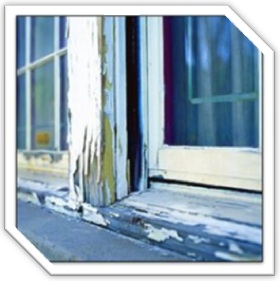
After a long wait, EPA is ramping up RRP enforcement against remodelers and other contractors
Publication Date: Wed, 2011-06-08 13:47
Will the EPA ever really enforce the Residential Lead-Based Paint Regulations?
This question has prompted thousands of contractors and sub-contractors to unwisely postpone their Certified Renovator training and Certified Firm applications, which are required by the EPA’s Renovation, Repair and Painting Rule (RRP Rule). Well, for those contractors who have been waiting for the EPA to begin fining companies for lead-related violations, it has finally happened! These recent fines have caused a huge panic in the building industry because it is now crystal clear that the EPA will enforce residential lead-based paint regulations.
A flurry of recent EPA fines
Most recently, the EPA announced on May 16 that a Rockland, Maine renovator is facing penalties related to alleged violations that occurred in October 2010.
As per the EPA’s investigation, the contractor, who had personally completed the required RRP Rule eight-hour training class, failed to: 1) obtain firm certification from the EPA, 2) post warning signs, 3) contain the work area, 4) contain waste from the renovation activities, 5) properly train his co-workers, 6) prohibit the use of high-speed paint removal machines without HEPA exhaust control, and 7) establish and maintain records necessary to demonstrate compliance with the RRP Rule.
Remember, the maximum penalty for the alleged violations is up to $37,500 per violation per day! Do you know how he was discovered? The EPA received a tip, from someone across the street from the renovation, who took a video and posted it on YouTube! The EPA promises to follow through on tips, such as this example, to identify if violations have jeopardized public health.
There are many other recent examples of the EPA cracking down on lead paint violations:
• On March 23 a Connecticut window and siding company was fined, and has agreed to pay, $30,702 for failing to distribute the required Renovate Right pamphlets to homeowners and residents prior to renovations. This settlement stemmed from an EPA inspection and the subsequent documentation the company submitted to the EPA.
• On March 31 a major St. Louis window company was fined, and has agreed to pay, $19,529 in civil penalties, plus the company will perform a supplemental environmental project worth $20,048. These fines again stemmed from a failure to distribute the Renovate Right pamphlets, which is required by the Residential Lead-Based Paint Hazard Reduction Act.
• On April 6, a California painting company was fined, and has agreed to pay $32,508.00 for violating the federal Pre-Renovation Rule by failing to distribute the Renovate Right pamphlets. The EPA further stipulated that the company “failed to establish and maintain records necessary to demonstrate compliance with the Toxic Substances Control Act regulations.”
• On April 12, a Maine property management company, which operates in 13 states, was fined, and has agreed to pay, $3,542 and will perform an abatement project valued at $31,884 to settle EPA claims that it violated both the federal lead-based paint disclosure requirements as well as the federal Pre-Renovation Rule. The property management company failed to distribute the Renovate Right pamphlets prior to renovations.
• The EPA announced on April 21 that a major Omaha, Neb., window company was fined, and has agreed to pay, $3,976 in civil penalties, and will perform a supplemental environmental project worth $11,928, for violating the federal Pre-Renovation Rule by failing to distribute the Renovate Right pamphlets prior to working on pre-1978 residential properties.
Even as recently as early May 2011, the EPA’s Region 6, which covers Texas, New Mexico, Oklahoma, Arkansas and Louisiana, sent letters, to contractors, confirming visits to the contractors’ offices to review the overall level of compliance with the Lead-Based Paint Regulations.
That’s right; the EPA will be physically reviewing the contractors’ paperwork for ALL of their renovations or modifications performed on pre-1978 properties over the last three years. The EPA will obtain copies of certain documents so that compliance with the RRP Rule (or lack of compliance) can be evaluated.
You know what that means. How many of these contractors are going to have the proper records? In fact, how many of these contractors are going to have NO records at all? Do YOU know what records to keep? Do YOU know how to properly document your renovations? By the way, some of the contractors who received letters were randomly selected by what is called a “Neutral Inspection Scheme,” which could be as easy as a simple Internet search for renovators or contractors!
This is just the beginning of EPA’s enforcement of lead-related issues within the residential construction industry. More reports of violations are being released constantly. Remember, the Toxic Substances Control Act Section 402(a)(3) directs the Environmental Protection Agency to establish and implement a fee program to recover, for the U.S. Treasury, the cost of administering and enforcing the lead-based paint activities requirements. The EPA is highly motivated to find violators and is actively doing so.
Who does the RRP Rule Affect?
Since long before the RRP Rule was enforced, I have been keeping general contractors, sub-contractors, remodelers, builders, property managers, painters, mechanical contractors, maintenance workers, and many others, informed and educated about the RRP Rule to keep them out of trouble.
These federal regulations affect ALL contractors and ALL sub-contractors, and even individuals, who get paid to do renovations. If you scrape, sand, abrade, cut a hole in, puncture, remove, or demolish any painted or surface-coated component, you have “disturbed” that surface, and the RRP Rule may apply.
Since the confusing RRP Rule is so specific and has such tiny minimums, virtually 100 percent of renovations on pre-1978 target housing and child-occupied facilities are affected by this legislation in some way. Many contractors have taken the “wait and see” approach to verify if the EPA was actually going to enforce the RRP Rule.
Three-Year Window of Liability
Far too many contractors have delayed taking the Certified Renovator training and have continued to add new illegally completed jobs to their risk burden, all with three-year windows of liability from the time of completion.
Remember, the EPA can simply “randomly” search for contractors or can specifically research renovation jobs, at anytime within 36 months after the jobs were finished, and contact the contractor to audit his or her required paperwork.
When the EPA asks for the proper documentation, how many contractors will say, “What paperwork?” Well, you can imagine the devastating chain of events that would follow that statement! Those contractors will definitely be in deep distress (among other things).
Scott von Gonten, CGA, CGP, LLRA, SHA, CR, CDST, a 24-year veteran of the building industry, is a licensed lead risk assessor and consultant, and a principal instructor, nationwide, for the National Center for Healthy Housing, an EPA-accredited training provider for Certified Renovator and Certified Dust Sampling Technician training. You can contact him at svongonten@conserveiq.com [1] or (713) 213-1205.
For more information on lead paint, including training opportunities, articles and more, visit www.LeadPaintProfessor.com
• John P. Lapotaire, CIEC
• Certified Indoor Environmental Consultant
• Microshield Environmental Services, LLC
• www.Microshield-ES.com
Share this with the #IAQS:
Leave a Comment » | Commercial IAQ, Residential IAQ | Tagged: air quality, ASTM, Chapter 468, ciec, Department of Business and Professional Regulation, Florida DBPR, Florida Statutes, HB 4171, HB 5005, HB 5007, healthy home, House Bill 713, IEQ 3.2, IESO, indoor air quality, Indoor Environmental Standard Organization, john lapotaire, John P. Lapotaire, LEED, microshield, mold, mold inspection, mold pretreatment, mold prevention, mold remediation, mold removal, mold testing, Mold-Related Services Licensing Program, new home mold, Part XVI, PCB BCAS 11-01, Residential Mold Assessment, SB 1244, Senate Bill 2234, USGBC | Permalink
Posted by John P. Lapotaire, CIEC
May 9, 2011

 Dear Colleague,
Indoor Air 2011 in Austin, Texas, is only one month away and should be one of the most exciting in the Indoor Air conference series. Members of IAQA are eligible for exclusive registration fee discounts to this important and unique international forum on IAQ.
A record number of abstracts were submitted for Indoor Air 2011. The technical program will involve nearly 600 podium presentations and 250 posters by authors hailing from 51 countries. There will also be 40 hours of special forums, workshops, panel discussions, and debates on timely and important issues relevant to indoor air quality and comfort.
The organizers of Indoor Air 2011 (The University of Texas at Austin) are committed to a robust program for practitioners and have structured the conference in a way to maximize interactions between practitioners and researchers.
The Indoor Air Quality Association (IAQA) is a Platinum Armadillo sponsor of Indoor Air 2011 and will hold mid-year business meetings in Austin two days prior to the start of Indoor Air 2011. IAQA’s annual member business meeting will be held on June 4th from 9:00 a.m. to 10:00 a.m., for the primary purpose of installing newly elected IAQA Directors. IAQA members will receive election ballots in the mail this week. The annual member business meeting takes place at the Radisson Hotel, 111 Cesar Chavez at Congress, Austin, Texas.
Many activities related to professional practice are designed for the first two full days of Indoor Air 2011 (June 6th and 7th). And many of these involve direct participation by members and officers of IAQA! Specific technical program activities that should be of interest to practitioners include:
Monday
• Keynote presentation by Joe Lstiburek on Weatherization and Indoor Air Quality
• Forum on Biological Exposures and Health
• Forum on Mold and Dampness Policy
• Panel discussion on Mold, Moisture and Remediation with questions developed by practitioners for internationally-recognized researchers
• Forum on Physician-Informed IAQ Assessments
• Workshop on Residential Health and Safety Assessment (sponsored by HUD)
• Technical session on Weatherization and IAQ
• Technical sessions on Standards and Guidelines (4 hours)
• Technical session on Field Studies
• Technical sessions on Formaldehyde (including measurements and control) (5 hours)
• Technical sessions on Allergy and Asthma (4 hours)
• Lunchtime discussion on Residential IAQ for Expectant Parents (with panel input from researchers and practitioners)
• And more!
Tuesday
• Forum on Indoor Sampling for Emerging Pollutants
• Panel discussion on Emerging Contaminants and Controls (including hydroxyl generators) with questions developed by practitioners for internationally-recognized researchers
• Forum on the Professional Practice of IEQ
• Workshop on IAQ and Affordable Housing (sponsored by HUD)
• Session and workshop on Climate-Change and IAQ (sponsored by the USEPA) (4 hours)
• Technical sessions on Health Symptoms and Assessments, and Interventions (4 hours)
• Multiple technical sessions related to Field Studies (VOCs and particles) (6 hours)
• Multiple technical sessions on Bioaerosols and Biological Agents (6 hours)
• Technical session on Case Studies and IAQ Practice
• Lunchtime discussion on A Rating System for Healthy Office Buildings (with panel input from researchers and practitioners)
• And more!
And there is a lot more from Wednesday through Friday including sessions on emerging contaminants, green and sustainable buildings, soil vapor intrusion, microbes in buildings, SVOCs, emissions from consumer products, psychology and perceptions, and much more.
Additional
• CEUs available!!!
• Great social program with Sunday opening ceremony (Ballet Folklorico and opening keynote), Monday Margarita fest and rockabilly music by Austin Music Hall of Fame inductee Rosie Flores, Tuesday evening mixer at the LBJ Presidential Library, and Wednesday BBQ at the world-famous Salt-Lick in the legendary Texas Hill Country.
The entire conference program with a special itinerary planning tool is now available on the conference website (click on “Program” to access program information). Additional information about the conference, including registration, hotels, social and companion programs and much more is now available on the Indoor Air 2011 website at www.indoorair2011.org.
We look forward to seeing you and many members of IAQA in Austin next month!
Sincerely,
IAQA Headquarters
• www.Microshield-ES.com
Share this with the #IAQS:
Leave a Comment » | Commercial IAQ, Residential IAQ | Tagged: air quality, ASTM, Chapter 468, ciec, Department of Business and Professional Regulation, Florida DBPR, Florida Statutes, HB 4171, HB 5005, HB 5007, healthy home, House Bill 713, IEQ 3.2, IESO, indoor air quality, Indoor Environmental Standard Organization, john lapotaire, John P. Lapotaire, LEED, microshield, mold, mold inspection, mold pretreatment, mold prevention, mold remediation, mold removal, mold testing, Mold-Related Services Licensing Program, new home mold, Part XVI, PCB BCAS 11-01, Residential Mold Assessment, SB 1244, Senate Bill 2234, USGBC | Permalink
Posted by John P. Lapotaire, CIEC
May 7, 2011
What a difference the professionals in our industry can make when we come together with a common goal.
When the initial house bill was introduced the outlook was daunting. Many thought that we would simply be overrun by the out of state deep pockets making a run at our repealing our state licensing requirements.
Not a chance. Not in our state. Quickly FABI, IEAQC, NORMI, and MARC came to gather to defeate the move to either repeal or amend our current Mold Professional Licensing Law.
The fight began in February of this year and ended just last night May 6th at 10:06pm.
Here is a quick re-cap of the fast paced legislation of the past four months.
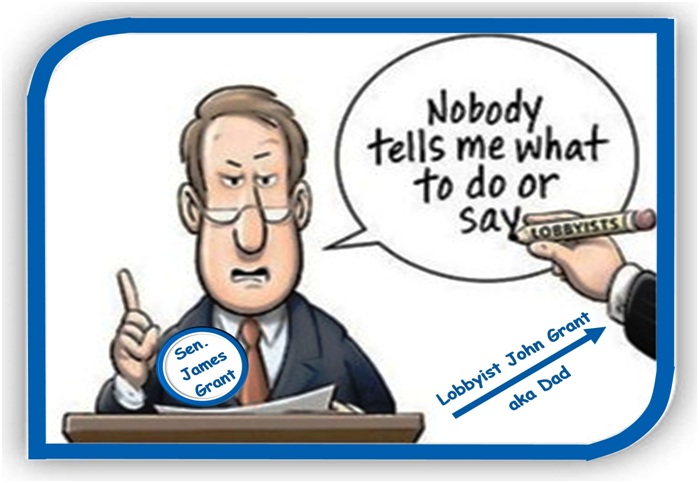
February 16th, 2011 just 12 days before the current mold related services licensing law grandfather time period elapsed, Representative James W Grant, District 47, filed HB 4171 in an effort to repeal the current legislation requiring mold remediators and mold assessors to obtain a state license.
February 21st, 2011 just seven days before the grandfathering time period elapsed, Senator Bill Norman, District 12, filed SB 2214 a sister bill intended to repeal the current Mold Related Services provision requiring both mold remediators and mold assessors to be licensed by the state.
Let’s not forget the WHY the bills were filed; The Lobbying firm of Florida Capitol Advocates, which includes former Sen. John Grant, was hired by the founder of the franchise 1-800-Got-Mold, Jason Earle. 1-800-Got-Mold, Mycelium Holdings is a New Jersey based Franchise with no current franchises in Florida.
Florida Capitol Advocates (Dad former Sen. John Grant) lobbied (son) Representative James W Grant, District 47 who introduced the bill as HB 4171 February 16th. Senator Norman filed the sister bill in the Senate SB 1244. February 21st.
Jason Earle stated in an email sent to me that his position regarding the repeal of the current mold licensing law are as follows. “the law would inhibit our ability to expand our business in a state which needs to create jobs, not restrict commerce. We are opposed to the educational and experiential prerequisites” Jason also stated “I made it clear that I’m in favor of regulation and enforcement in the mold industry.”
Well lucky for Mr. Earle we still have regulation in the Mold Industry!
HB 4171 and SB 1244 died in committee and never made it to the floor for a vote!
This was primarily due to the introduction of HB 5005 and HB 5007.
March 15th, 2011 The introduction of PCB BCAS 11-01 (proposed committee bill) is being heard tomorrow morning in the House Business & Consumer Services Subcommittee.
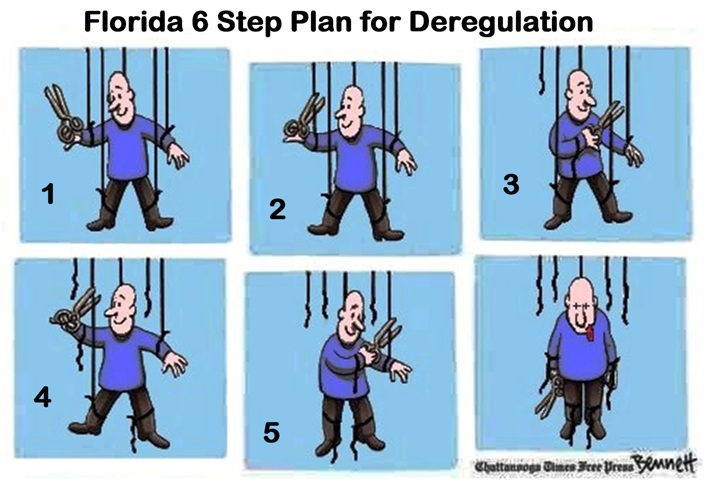
This is the introduction of a proposed Bill that is “An act relating to the deregulation of professions and occupations; amending s. 20.165, F.S.;”
March 15th, 2011 CS/HB 5005 – Deregulation of Professions and Occupations, GENERAL BILL by Economic Affairs Committee and Business & Consumer Affairs Subcommittee and Hukill.
May 6th, 2011 Failed to Pass as amended by Conference Committee Report; YEAS 6 NAYS 32 on Friday, May 06, 2011 9:51 PM
March 15th, 2011 CS/HB 5007 – Reducing and Streamlining Regulations, Mold Related services removed from HB 5005 via HB 5007.
HB Bill 5007 would amend the current Florida Mold Licensing Law by:
- Eliminating the education language requiring advanced education and would only require an applicant to possesses a high school diploma or its equivalent.
- Eliminating any documented training in water, mold, and respiratory protection and would only require an applicant to pass the current approved licensing examination.
- Eliminating the requirement of an applicant passing a certification examination offered by a nationally recognized organization and adds the phrase “or state”
- Eliminates the training in water, mold, and respiratory protection requirement in section 468.8419 Prohibitions: penalties.-
- Reduces the applicants experience requirement of 3 years to 1 year.
- Reduces the number of mold assessments or remediation invoices prepared by the applicant from 40 to 10.
These proposed amendments to the current licensing law would reduce the license to nothing more than a tax on the industry.
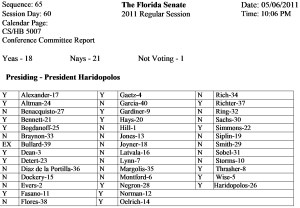
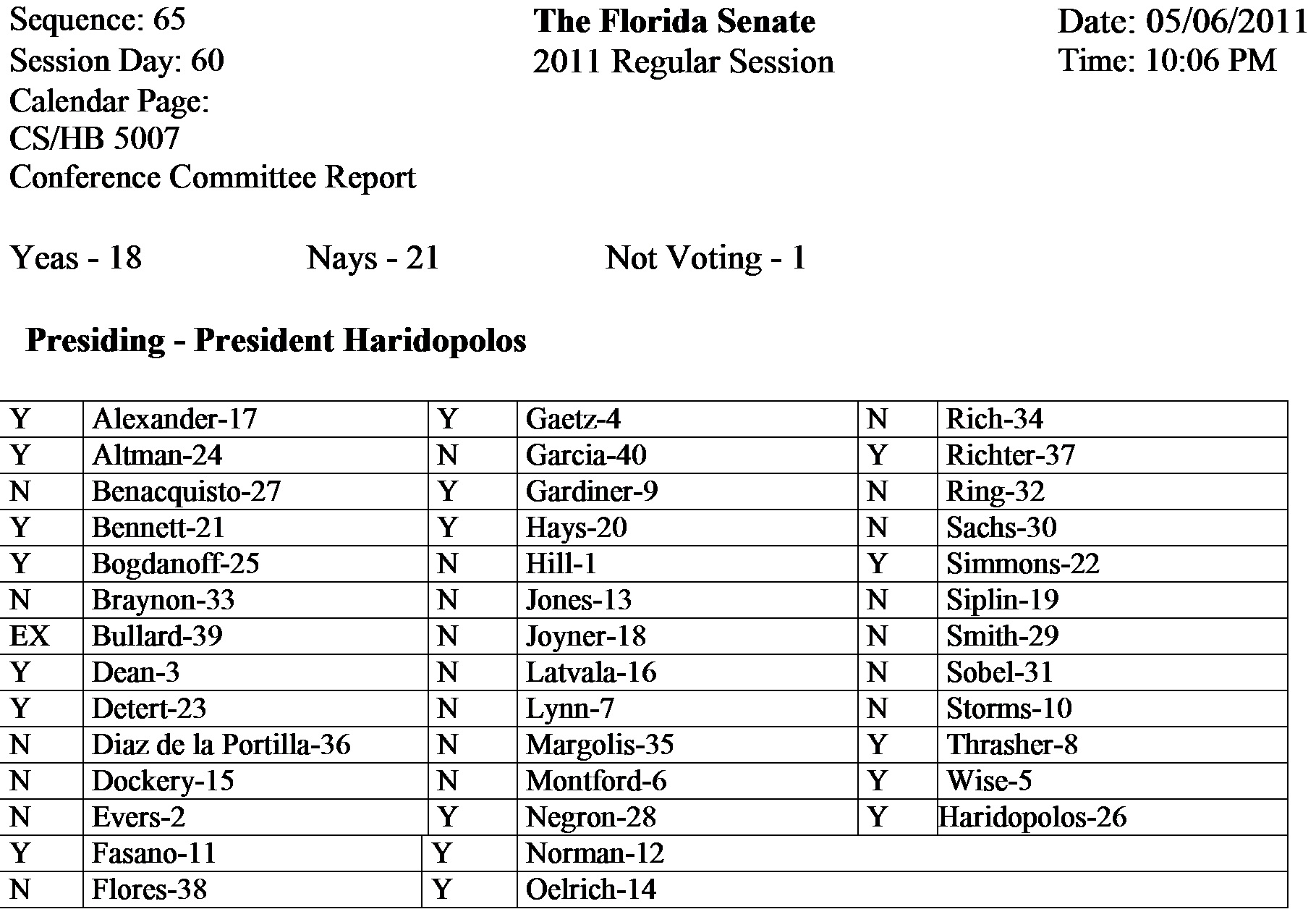
May 6th, 2011 HB 5007 Failed to Pass as amended by Conference Committee Report; YEAS 18 NAYS 21 on Friday, May 06, 2011 10:06 PM
The efforts to prevent the repeal and amendment of the current Mold Licensing Law seemed endless and overwhelming at times.
If it were not for the combined efforts of the Mold Professionals from across the State which included, Industry Suppliers, Laboratories, Professional Organizations, Private Corporations, as well as Individual Mold Assessors and Remediators I’m convinced we would have either no licensing law or no education and experience requirements for a license.
I want to personally thank
- Our M.A.R.C Lobbyist Dan Pollock of Pollock & Associates.
- Harvey Gordon of IEAQC and Lobbyist, Gene Adams of Pennington, Moore, Wilkinson, Bell & Dunbar, P.A.
- Bill Hunter of FABI Florida Home Inspectors Council, and Lobbyist Wayne Bertsch, ,
- Doug Hoffman of NORMI,
- and all of the Florida Mold Professionals who took time to write emails and make phone calls.
This is a monumental shared success for Florida Mold Professionals and M.A.R.C. of Florida.
Thank You All
John P. Lapotaire, CIEC
M.A.R.C. of Florida
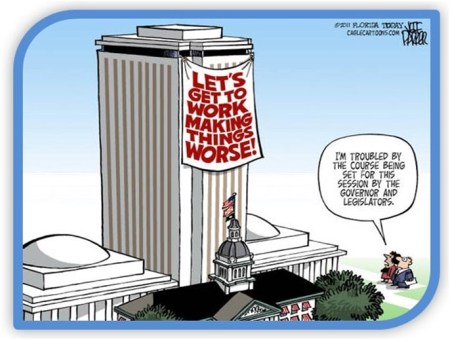
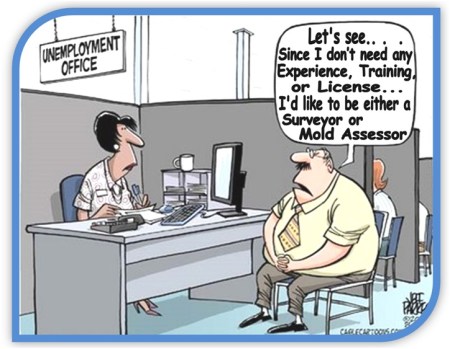
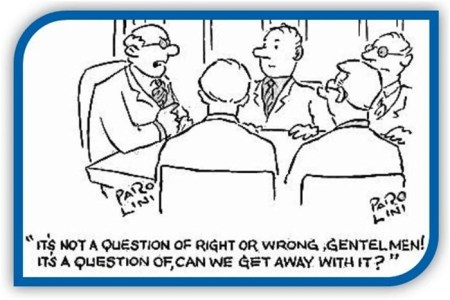
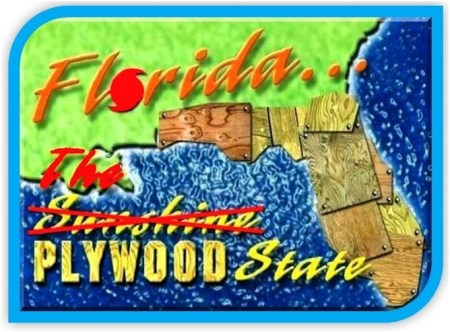
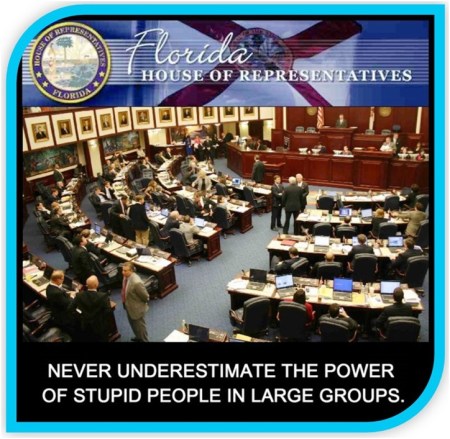
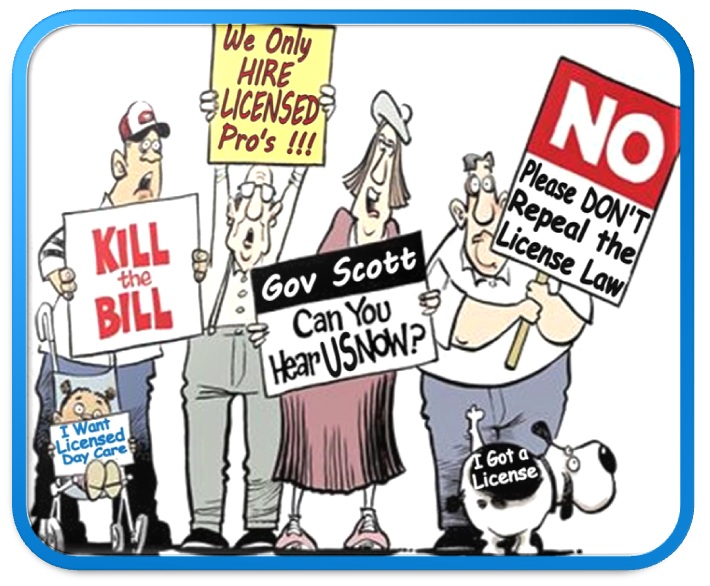
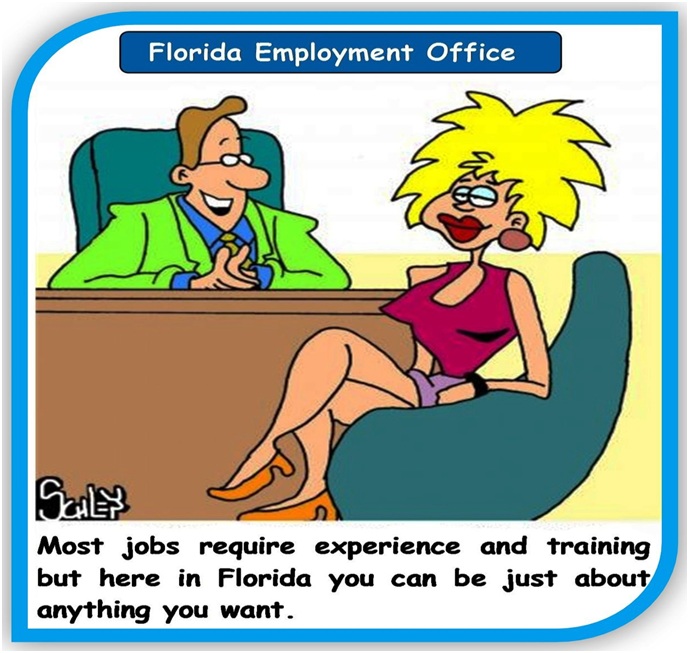
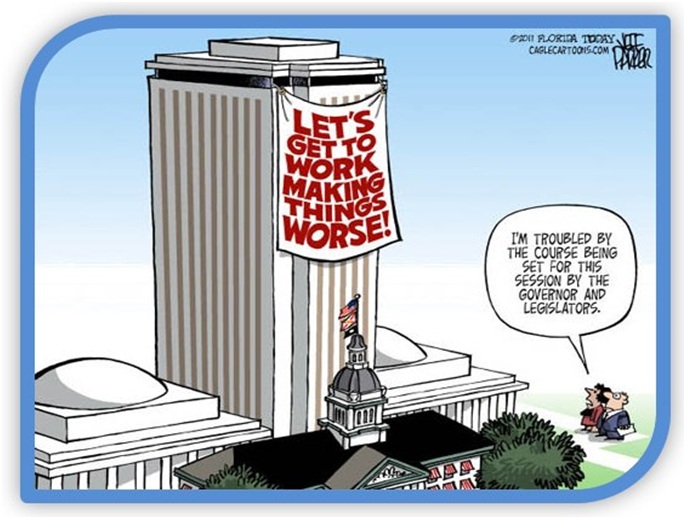
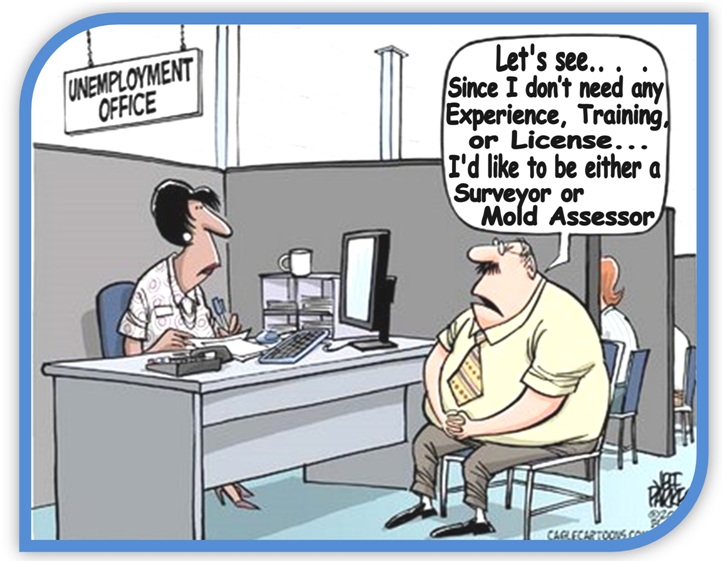
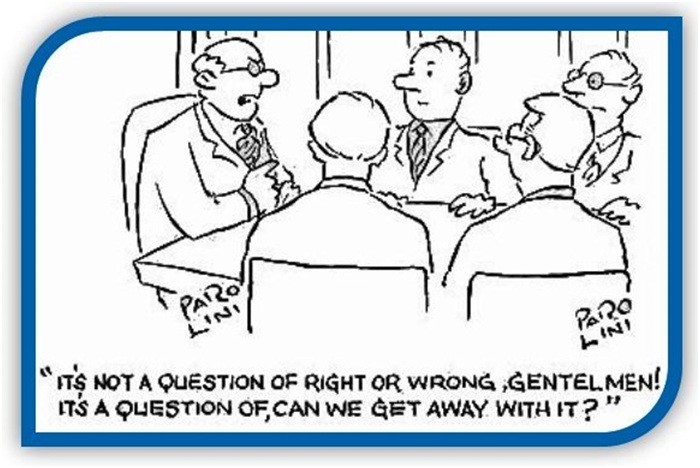
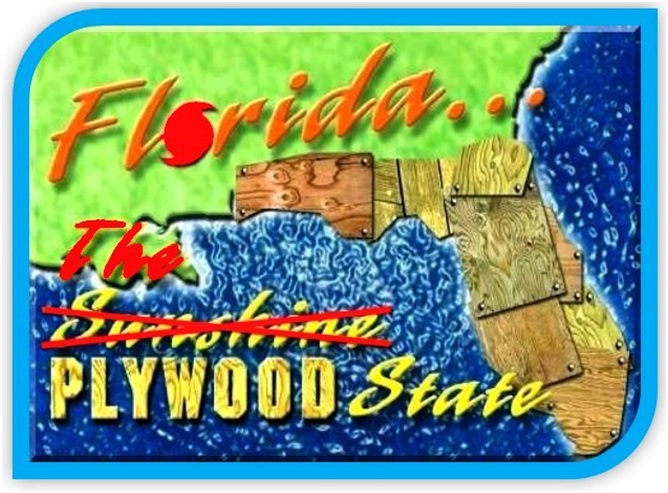
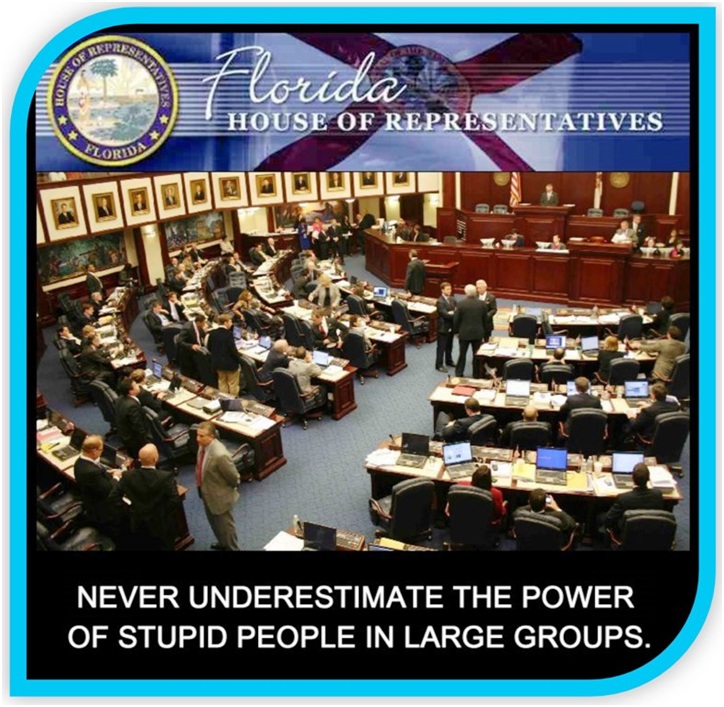
Below are some of the Political Cartoons used to get our message across to the Florida House and Senate. Enjoy.
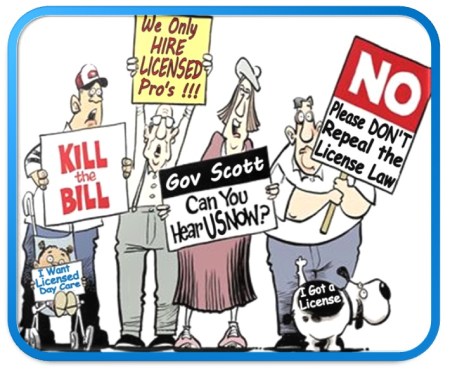
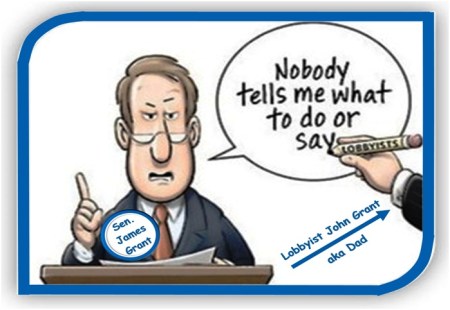
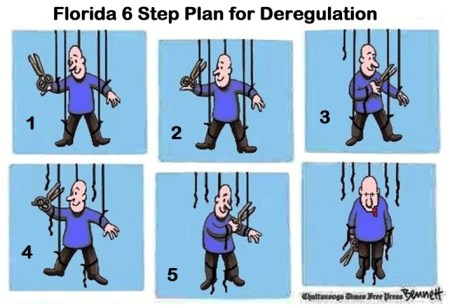
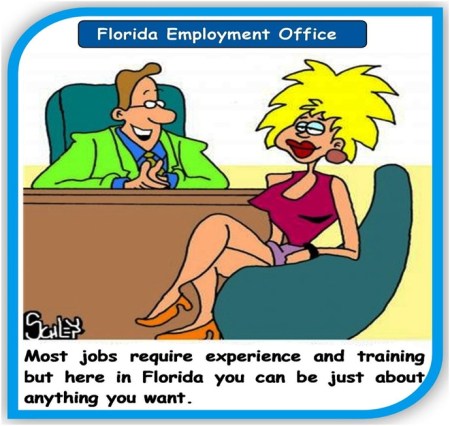

• John P. Lapotaire, CIEC
• Certified Indoor Environmental Consultant
• Microshield Environmental Services, LLC
• www.Microshield-ES.com
Share this with the #IAQS:
2 Comments | Commercial IAQ, Residential IAQ | Tagged: air quality, ASTM, Chapter 468, ciec, Department of Business and Professional Regulation, Florida DBPR, Florida Statutes, HB 4171, HB 5005, HB 5007, healthy home, House Bill 713, IEQ 3.2, IESO, indoor air quality, Indoor Environmental Standard Organization, john lapotaire, John P. Lapotaire, LEED, microshield, mold, mold inspection, mold pretreatment, mold prevention, mold remediation, mold removal, mold testing, Mold-Related Services Licensing Program, new home mold, Part XVI, PCB BCAS 11-01, Residential Mold Assessment, SB 1244, Senate Bill 2234, USGBC | Permalink
Posted by John P. Lapotaire, CIEC
May 6, 2011
 Thank you to all of the M. A. R.C. supporters across the state of Florida who helped in this fight to maintain our Florida mold professional license status.
M. A. R.C. of Florida worked together with Florida mold professionals from across the state represented by several independent professional organizations to defeat first the “out-of-state interest” pushing to repeal the current Florida mold professional licensing law and then the push to deregulate the current Florida mold professional licensing law by eliminating any and all education and training requirements.
Tonight, as I watched the live broadcast online and Dan Pollock watched from the fourth floor of the Senate building, and after a lengthy and a hotly debated session the Senate voted against Bolt HB 5005 and HB 5007.
The vote came in at roughly 10:10 pm this evening at the tail end of a long and hard five Senate Budget Committee meeting with the final vote on House Bill 5007 22 nays and 18 yeas.
The fight on the front lines of the Hill was fought by Dan Pollock of Pollock and Associates. Dan Worked extremely hard on behalf of M. A. R.C. of Florida and all of Florida’s license mold professionals.
The real fight takes place every day in the homes and offices of Florida’s mold professionals as they made calls to their individual district representatives and senators and sent hundreds if not thousands of e-mails to their individual representatives and senators in support of maintaining their current professional licensed status.
This is an extremely stressful legislative session that ended in the Senate the victory for Florida mold professionals. We maintain the current mold licensing law as it stands with the grandfathering period over and the education and training requirements in place.
M. A. R.C. of Florida still needs your continued support as the issue most certainly will rear its ugly head in the next session.
Tonight we celebrate our victory as license mold professionals.
Thank You All.
John Lapotaire, CIEC
M.A.R.C. of Florida
• John P. Lapotaire, CIEC
• Certified Indoor Environmental Consultant
• Microshield Environmental Services, LLC
• www.Microshield-ES.com
Share this with the #IAQS:
Leave a Comment » | Commercial IAQ, Residential IAQ | Tagged: air quality, ASTM, Chapter 468, ciec, Department of Business and Professional Regulation, Florida DBPR, Florida Statutes, HB 4171, HB 5005, HB 5007, healthy home, House Bill 713, IEQ 3.2, IESO, indoor air quality, Indoor Environmental Standard Organization, john lapotaire, John P. Lapotaire, LEED, microshield, mold, mold inspection, mold pretreatment, mold prevention, mold remediation, mold removal, mold testing, Mold-Related Services Licensing Program, new home mold, Part XVI, PCB BCAS 11-01, Residential Mold Assessment, SB 1244, Senate Bill 2234, USGBC | Permalink
Posted by John P. Lapotaire, CIEC
May 5, 2011
Dear Senator/Representative
I am writing to you with my concerns regarding HB 5007. Please DO NOT accept HB 5007 without the following revisions:
1) Testing should be required and that testing should be performed as a proctored examination by a nationally recognized, independent and State accepted Training Provider who has been approved by the MRS Board.
2) Training in water, mold, and respiratory protection are crucial to the safe and correct assessment and remediation of mold, protection of the public and workers. The necessary training is in accordance with ANSI and OSHA. American National Standard Institute Approved S500 – Standard and Reference Guide for Professional Water Damage Restoration American National Standard Institute Approved S520 – Standard and Reference Guide for Mold Remediation Occupational Safety and Health Administration OSHA – Respiratory Protection Standard (29 CFR 1910.134 and 29 CFR 1926.103) OSHA is the main federal agency charged with the enforcement of safety and health legislation
Please amend this bill or oppose it as written.
Thank you.
Click This Link to Send the Email

• John P. Lapotaire, CIEC
• Certified Indoor Environmental Consultant
• Microshield Environmental Services, LLC
• www.Microshield-ES.com
Share this with the #IAQS:
Leave a Comment » | Commercial IAQ, Residential IAQ | Tagged: air quality, ASTM, Chapter 468, ciec, Department of Business and Professional Regulation, Florida DBPR, Florida Statutes, HB 4171, HB 5005, HB 5007, healthy home, House Bill 713, IEQ 3.2, IESO, indoor air quality, Indoor Environmental Standard Organization, john lapotaire, John P. Lapotaire, LEED, microshield, mold, mold inspection, mold pretreatment, mold prevention, mold remediation, mold removal, mold testing, Mold-Related Services Licensing Program, new home mold, Part XVI, PCB BCAS 11-01, Residential Mold Assessment, SB 1244, Senate Bill 2234, USGBC | Permalink
Posted by John P. Lapotaire, CIEC
May 5, 2011
The Florida Legislature has for consideration legislation – HB 5007 – which will significantly reduce the licensing requirements for future licensing and dilutes the licensed profession in Florida.
A majority of you obtained your Mold Services License thru the Grandfathering Provision which expired on March 1, 2011. As it now stands, if a person, after March 1, desires to be licensed as a mold assessor or remediatior, they must pass the required examination and one of the following:
(a)
1. For a mold remediator, at least a 2-year associate of arts degree, or the equivalent, with at least 30 semester hours in microbiology, engineering, architecture, industrial hygiene, occupational safety, or a related field of science from an accredited institution and a minimum of 1 year of documented field experience in a field related to mold remediation; or
2. A high school diploma or the equivalent with a minimum of 4 years of documented field experience in a field related to mold remediation.
(b)
1. For a mold assessor, at least a 2-year associate of arts degree, or the equivalent, with at least 30 semester hours in microbiology, engineering, architecture, industrial hygiene, occupational safety, or a related field of science from an accredited institution and a minimum of 1 year of documented field experience in conducting microbial sampling or investigations; or
2. A high school diploma or the equivalent with a minimum of 4 years of documented field experience in conducting microbial sampling or investigations.
However, House Bill 5007 the Reducing and Streamlining Regulations legislation, and as proposed by the Budget Conference Committee last week, it will change those above provisions to only require a high school diploma and pass a “required examine.” HB 5007 was only heard in the House and while there was never a companion measure filed or considered by the Senate, circumventing the legislative process.
Guard your future and that of the industry!
Please email or call (only) your state Senator TODAY, ask them to VOTE NO on HB 5007.
As licensed professionals, we are proud of the current education, training, experience, rules of conduct, continuing education and background checks that give consumers confidence when choosing a licensed professional.
This email has been sent in cooperation with the Florida Home Inspectors Council and the Indoor Environmental Air Quality Council.

• John P. Lapotaire, CIEC
• Certified Indoor Environmental Consultant
• Microshield Environmental Services, LLC
• www.Microshield-ES.com
Share this with the #IAQS:
Leave a Comment » | Commercial IAQ, Residential IAQ | Tagged: air quality, ASTM, Chapter 468, ciec, Department of Business and Professional Regulation, Florida DBPR, Florida Statutes, HB 4171, HB 5005, HB 5007, healthy home, House Bill 713, IEQ 3.2, IESO, indoor air quality, Indoor Environmental Standard Organization, john lapotaire, John P. Lapotaire, LEED, microshield, mold, mold inspection, mold pretreatment, mold prevention, mold remediation, mold removal, mold testing, Mold-Related Services Licensing Program, new home mold, Part XVI, PCB BCAS 11-01, Residential Mold Assessment, SB 1244, Senate Bill 2234, USGBC | Permalink
Posted by John P. Lapotaire, CIEC















 Indoor Air Quality Solutions, IAQS