November 13, 2011
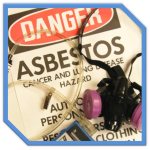 Toxic chemicals can be found everywhere we look. Whether they are in your home, or the ground underneath, it is important to be aware of chemicals with which you and your family may come in contact.
What is asbestos?
Asbestos is a naturally occurring mineral that was incorporated into more than 5,000 products in the 1980’s. This mineral has excellent insulating and fireproofing characteristics which is why it was commonly used for commercial purposes. This toxic mineral can be found in various deposits throughout the world; the environmental hazard surrounding asbestos still exists today.
Where has it been used?
As previously mentioned, asbestos has been used in thousands of products. Some of these products include household items, paper goods, automobiles, heating and cooling systems, and even in the construction materials used to possibly build your house. The majority of these materials are commonly found in construction materials used to in buildings and homes. Asbestos has such a high resistance to heat it was used in many heating systems and insulation. High concentrations of airborne asbestos can occur after these materials are disturbed by improperly trying to remove the materials or a remodeling project.
Why is it toxic?
Mesothelioma is a rare form of cancer almost exclusively caused by asbestos exposure. Due to a severe latency period of symptoms ranging between 20 and 50 years from the time of exposure, mesothelioma cancer is often diagnosed in a late stage of development.
This tendency for late diagnosis often complicates mesothelioma treatment options; as a result, the average mesothelioma life expectancy is 4 to 18 months. There is no cure for this cancer; but, some patients who were diagnosed early enough have survived mesothelioma. For this reason, it is important for anyone exposed to asbestos to seek regular medical exams to check for signs of asbestos disease.
The best way to prevent exposure to asbestos is to learn about it, however regardless of the knowledge that is now available, not everyone takes the proper precautions that are needed to prevent exposure. Prevention in the workplace can be as simple as wearing protective gear or breathing devices. Since so many homes were built with asbestos containing products, the majority of household exposure comes from renovations, or do-it-yourself home projects. Once the asbestos is disturbed you are at risk for exposure, so it is important to have professionals involved, or the areas tested for asbestos in advance.
The Mesothelioma Center at Asbestos.com was created to assist patients affected by asbestos-related disease. Visit www.asbestos.com for more information regarding asbestos exposure. You can “like” us on Face book and “Follow” us on Twitter for daily updates and news articles surrounding asbestos and asbestos related diseases.
• John P. Lapotaire, CIEC
• Certified Indoor Environmental Consultant
• Microshield Environmental Services, LLC
• www.Microshield-ES.com
Share this with the #IAQS:
 Leave a Comment » |
  Commercial IAQ, Residential IAQ | Tagged: air quality, ASTM, Chapter 468, ciec, Department of Business and Professional Regulation, Florida DBPR, Florida Statutes, HB 4171, HB 5005, HB 5007, healthy home, House Bill 713, IEQ 3.2, IESO, indoor air quality, Indoor Environmental Standard Organization, john lapotaire, John P. Lapotaire, LEED, microshield, mold, mold inspection, mold pretreatment, mold prevention, mold remediation, mold removal, mold testing, Mold-Related Services Licensing Program, new home mold, Part XVI, PCB BCAS 11-01, Residential Mold Assessment, SB 1244, Senate Bill 2234, USGBC |
  Permalink
 Posted by John P. Lapotaire, CIEC
October 26, 2011
 By ARAcontent
Posted: Oct. 12, 2011 | 1:11 a.m.
Updated: Oct. 12, 2011 | 3:10 a.m.
When the winter winds start to howl, it’s a natural response to want to close your home up tightly. To stay warm and avoid wasting energy, you close the windows – or even seal them with window film — find ways to stop air from leaking in through cracks and under doors, and then put your heating system to work. But when those instincts kick in, remember that what you’re doing is sealing air inside your home.
There’s a definite upside to sealing your house up well for the winter: you’ll stay warmer, with less impact on your energy bills. However, the downside is that those actions can negatively affect the quality of the air you’ll be breathing. It’s a particular concern because of the increased amount of time people spend indoors through the winter.
Heating, ventilation and air conditioning (HVAC) systems have been shown to act as a collection source for a variety of contaminants that have the potential to affect health, such as mold, fungi, bacteria and very small particles of dust. According to the U.S. Environmental Protection Agency, indoor air can be two to five times more polluted than outdoor air.
“When you flip that switch on your heater, there is a lot of dust and debris – collected in the coils over the summer months – that either burns into fumes or gushes into the house through your vents,” says Aaron Marshbanks, board member of the National Air Duct Cleaners Association (NADCA).
Read More
• John P. Lapotaire, CIEC
• Certified Indoor Environmental Consultant
• Microshield Environmental Services, LLC
• www.Microshield-ES.com
Share this with the #IAQS:
Leave a Comment » | Commercial IAQ, Residential IAQ | Tagged: air quality, ASTM, Chapter 468, ciec, Department of Business and Professional Regulation, Florida DBPR, Florida Statutes, HB 4171, HB 5005, HB 5007, healthy home, House Bill 713, IEQ 3.2, IESO, indoor air quality, Indoor Environmental Standard Organization, john lapotaire, John P. Lapotaire, LEED, microshield, mold, mold inspection, mold pretreatment, mold prevention, mold remediation, mold removal, mold testing, Mold-Related Services Licensing Program, new home mold, Part XVI, PCB BCAS 11-01, Residential Mold Assessment, SB 1244, Senate Bill 2234, USGBC | Permalink
Posted by John P. Lapotaire, CIEC
October 26, 2011
 New campaign urges businesses to fit ventilation systems that comply with European guidelines
Concerns about air quality in the workplace have until now tended to focus on little more than complaints about dripping air conditioning units or funny smells coming from the communal fridge in the kitchen.
But now a new campaign is seeking to highlight the financial and health implications of poor indoor air quality, which can often be more harmful than outdoor pollution, according to experts.
The initiative, launched by the Campaign for Clean Air in London yesterday, argues that better indoor air quality (IAQ) can help businesses reduce energy costs and carbon emissions, while also improving the health and productivity of employees.
Simon Birkett, founder of the Campaign for Clean Air in London, said the best filtration systems can help businesses protect employees from 90 per cent of air pollutants for up to 90 per cent of the time.
Indoor air can become polluted by particulates that seep in from outside or from internal sources such as air condintioners, radiators, cigarette smoke and even scented candles.
Read More
• John P. Lapotaire, CIEC
• Certified Indoor Environmental Consultant
• Microshield Environmental Services, LLC
• www.Microshield-ES.com
Share this with the #IAQS:
Leave a Comment » | Commercial IAQ | Tagged: air quality, ASTM, Chapter 468, ciec, Department of Business and Professional Regulation, Florida DBPR, Florida Statutes, HB 4171, HB 5005, HB 5007, healthy home, House Bill 713, IEQ 3.2, IESO, indoor air quality, Indoor Environmental Standard Organization, john lapotaire, John P. Lapotaire, LEED, microshield, mold, mold inspection, mold pretreatment, mold prevention, mold remediation, mold removal, mold testing, Mold-Related Services Licensing Program, new home mold, Part XVI, PCB BCAS 11-01, Residential Mold Assessment, SB 1244, Senate Bill 2234, USGBC | Permalink
Posted by John P. Lapotaire, CIEC
October 26, 2011
So Md News
 Chip Jackson, associate vice president for planning and facilities, said the college is working on a plan with construction contractors now for the mold remediation and said it would be “at least a couple weeks” before students move back into the residence halls. He said he hopes the work will be done before the end of the semester, which is in mid-December. “Any institution will have a mold issue here, a mold issue there,” Jackson said, but this systemic mold problem is so severe that it is forcing the evacuations of both Prince George and Caroline residence halls.
Read More
• John P. Lapotaire, CIEC
• Certified Indoor Environmental Consultant
• Microshield Environmental Services, LLC
• www.Microshield-ES.com
Share this with the #IAQS:
Leave a Comment » | Commercial IAQ, Residential IAQ | Tagged: air quality, ASTM, Chapter 468, ciec, Department of Business and Professional Regulation, Florida DBPR, Florida Statutes, HB 4171, HB 5005, HB 5007, healthy home, House Bill 713, IEQ 3.2, IESO, indoor air quality, Indoor Environmental Standard Organization, john lapotaire, John P. Lapotaire, LEED, microshield, mold, mold inspection, mold pretreatment, mold prevention, mold remediation, mold removal, mold testing, Mold-Related Services Licensing Program, new home mold, Part XVI, PCB BCAS 11-01, Residential Mold Assessment, SB 1244, Senate Bill 2234, USGBC | Permalink
Posted by John P. Lapotaire, CIEC
August 3, 2011
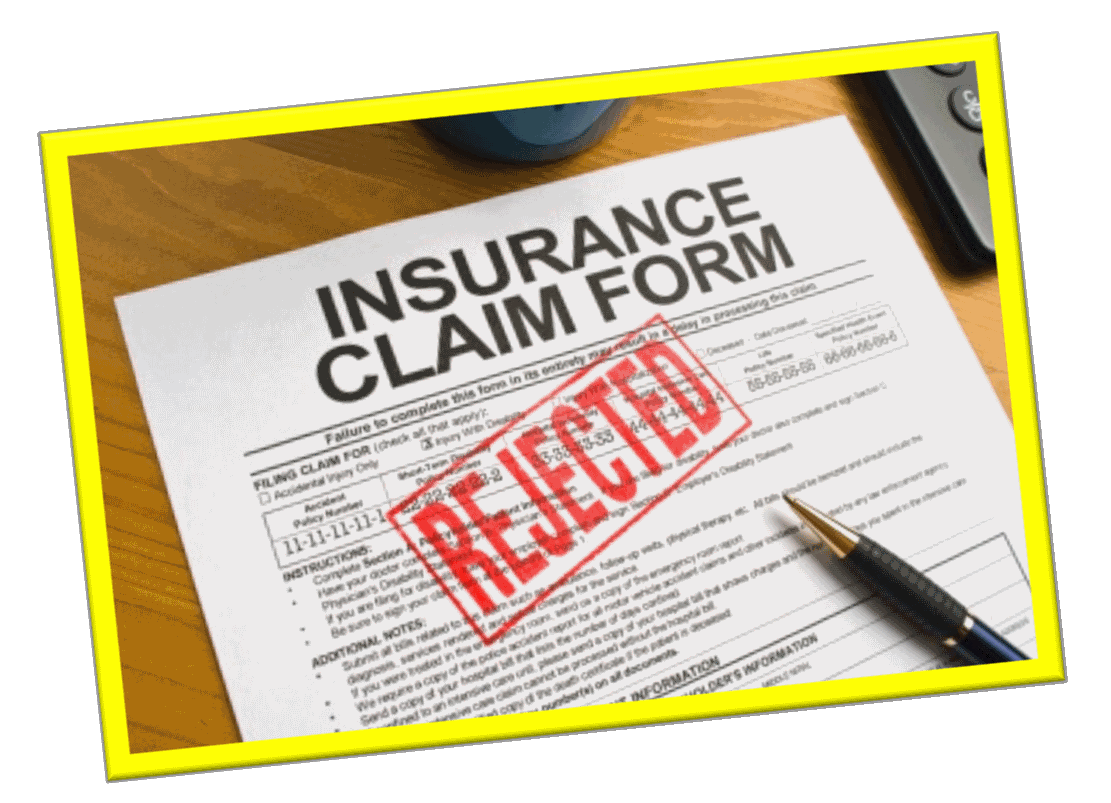
 When Filing Insurance Claims:
When filing your claim, complete a precisely detailed estimate of what is required to repair or rebuild your property. Assist in the preparation of inventories for damaged personal property, contents, and related items. With your help in providing correct documentation, and determining ages, descriptions and determine the approximate current values.
Have your losses or additional living expenses ready to submit in your claim. Establish a professional line of communications with the insurance adjuster and present estimates, inventories, and other valuations to the insurance adjuster.
A Public Adjuster can meet with your insurance company to adjust your claim fairly and equitably, thus resulting in an acceptable settlement to you.
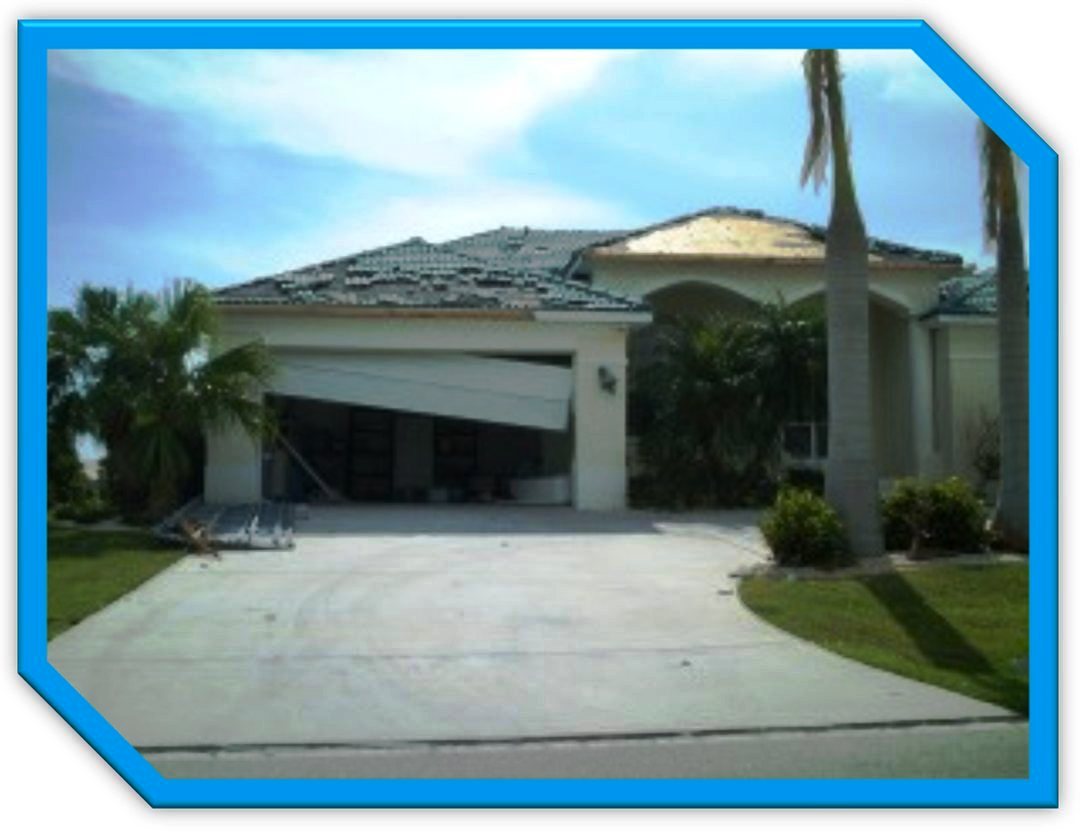
You will need a very well written report detailing all Hurricane and Storm related damages with photos.
• John P. Lapotaire, CIEC
• Certified Indoor Environmental Consultant
• Microshield Environmental Services, LLC
• www.Microshield-ES.com
Share this with the #IAQS:
1 Comment | Commercial IAQ, Flood Information, Hurricane Information, Residential IAQ, Storm Damage Information | Tagged: air quality, ASTM, Chapter 468, ciec, Department of Business and Professional Regulation, Florida DBPR, Florida Statutes, HB 4171, HB 5005, HB 5007, healthy home, House Bill 713, IEQ 3.2, IESO, indoor air quality, Indoor Environmental Standard Organization, john lapotaire, John P. Lapotaire, LEED, microshield, mold, mold inspection, mold pretreatment, mold prevention, mold remediation, mold removal, mold testing, Mold-Related Services Licensing Program, new home mold, Part XVI, PCB BCAS 11-01, Residential Mold Assessment, SB 1244, Senate Bill 2234, USGBC | Permalink
Posted by John P. Lapotaire, CIEC
August 3, 2011
 The Saffir/Simpson Hurricane Scale
A 1-5 rating based on a hurricane’s present intensity, used to give an estimate of the potential property damage and flooding expected along the coast from a hurricane landfall. Wind speed is the determining factor in the scale, as storm surge values are highly dependent on the slope of the continental shelf in the landfall region.
Category 1
Winds 74-95 mph (64-82 knots or 119-153 km/hr) – Storm surge generally 4-5 ft above normal. No real damage to building structures. Damage primarily to unanchored mobile homes, shrubbery, and trees. Some damage to poorly constructed signs. Also, some coastal road flooding and minor pier damage.
Category 2
Winds 96-110 mph (83-95 knots or 154-177 km/hr) – Storm surge generally 6-8 feet above normal. Some roofing material, door, and window damage of buildings. Considerable damage to shrubbery and trees with some trees blown down. Considerable damage to mobile homes, poorly constructed signs, and piers. Coastal and low-lying escape routes flood 2-4 hours before arrival of the hurricane center. Small craft in unprotected anchorages break moorings.
Category 3
Winds 111-130 mph (96-113 knots or 178-209 km/hr) – Storm surge generally 9-12 ft above normal. Some structural damage to small residences and utility buildings with a minor amount of curtainwall failures. Damage to shrubbery and trees with foliage blown off trees and large tress blown down. Mobile homes and poorly constructed signs are destroyed. Low-lying escape routes are cut by rising water 3-5 hours before arrival of the hurricane center. Flooding near the coast destroys smaller structures with larger structures damaged by battering of floating debris. Terrain continuously lower than 5 ft above mean sea level may be flooded inland 8 miles (13 km) or more. Evacuation of low-lying residences with several blocks of the shoreline may be required.
Category 4
Winds 131-155 mph (114-135 knots or 210-249 km/hr) – Storm surge generally 13-18 ft above normal. More extensive curtainwall failures with some complete roof structure failures on small residences. Shrubs, trees, and all signs are blown down. Complete destruction of mobile homes. Extensive damage to doors and windows. Low-lying escape routes may be cut by rising water 3-5 hours before arrival of the hurricane center. Major damage to lower floors of structures near the shore. Terrain lower than 10 ft above sea level may be flooded requiring massive evacuation of residential areas as far inland as 6 miles (10 km).
Category 5
Winds greater than 155 mph (135 knots or 249 km/hr) – Storm surge generally greater than 18 ft above normal. Complete roof failure on many residences and industrial buildings. Some complete building failures with small utility buildings blown over or away. All shrubs, trees, and signs blown down. Complete destruction of mobile homes. Severe and extensive window and door damage. Low-lying escape routes are cut by rising water 3-5 hours before arrival of the hurricane center. Major damage to lower floors of all structures located less than 15 ft above sea level and within 500 yards of the shoreline. Massive evacuation of residential areas on low ground within 5-10 miles (8-16 km) of the shoreline may be required.
• John P. Lapotaire, CIEC
• Certified Indoor Environmental Consultant
• Microshield Environmental Services, LLC
• www.Microshield-ES.com
Share this with the #IAQS:
Leave a Comment » | Commercial IAQ, Flood Information, Hurricane Information, Residential IAQ, Storm Damage Information | Tagged: air quality, ASTM, Chapter 468, ciec, Department of Business and Professional Regulation, Florida DBPR, Florida Statutes, HB 4171, HB 5005, HB 5007, healthy home, House Bill 713, IEQ 3.2, IESO, indoor air quality, Indoor Environmental Standard Organization, john lapotaire, John P. Lapotaire, LEED, microshield, mold, mold inspection, mold pretreatment, mold prevention, mold remediation, mold removal, mold testing, Mold-Related Services Licensing Program, new home mold, Part XVI, PCB BCAS 11-01, Residential Mold Assessment, SB 1244, Senate Bill 2234, USGBC | Permalink
Posted by John P. Lapotaire, CIEC
August 2, 2011
 The flooding of your home by untreated or inadequately treated groundwater is responsible for a number of outbreaks of gastrointestinal illnesses that occur every year throughout the United States. In many of these outbreaks, sewage was most often identified as the contamination source.
Past flooding events in Florida have created sewage contamination problems, however simple testing solutions can provide fast information to business and homeowners.
Here at Microshield Environmental Services, LLC, we test for sewage contamination by testing for certain indicator organisms (total coliforms, fecal coliforms, E.coli, and Enterococcus). These indicator organisms are assumed to be indigenous to feces, and thus their presence in environmental samples is indicative of fecal contamination. We also provide our clients with more definitive answers by testing for individual pathogens such as Salmonella, Giardia, and Cryptosporidium.
If you think you have a sewage, bacteria, or mold contamination problem, either in ground water or other bulk material, please contact Microshield Environmental Services, LLC. for information on your indoor environmental testing needs.
• John P. Lapotaire, CIEC
• Certified Indoor Environmental Consultant
• Microshield Environmental Services, LLC
• www.Microshield-ES.com
Share this with the #IAQS:
Leave a Comment » | Commercial IAQ, Flood Information, Hurricane Information, Residential IAQ, Storm Damage Information | Tagged: air quality, ASTM, Chapter 468, ciec, Department of Business and Professional Regulation, Florida DBPR, Florida Statutes, HB 4171, HB 5005, HB 5007, healthy home, House Bill 713, IEQ 3.2, IESO, indoor air quality, Indoor Environmental Standard Organization, john lapotaire, John P. Lapotaire, LEED, microshield, mold, mold inspection, mold pretreatment, mold prevention, mold remediation, mold removal, mold testing, Mold-Related Services Licensing Program, new home mold, Part XVI, PCB BCAS 11-01, Residential Mold Assessment, SB 1244, Senate Bill 2234, USGBC | Permalink
Posted by John P. Lapotaire, CIEC
August 2, 2011
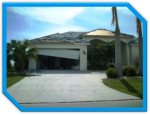 Storm Damage Assessment and Environmental Testing
National attention has brought mold and indoor air quality to the forefront of your clients’ concerns. Many clients have become knowledgeable about mold infestations and health issues.
By understanding what is hype and what is truth, you can recommend a certified Indoor Air Quality Specialist who will assess and analyze the property. The solutions recommend by a specialist will allow you and your client to move forward with the transaction quickly, efficiently, and effectively.
After The Clean Up Make Sure Your Home Is Free Of ;
- Mold
- Bacteria
- Sewage Contamination
- E. Coli
- Fecal Coliform
- Fecal Streptococcus
- Legionella
- MRSA
Being equipped with some basic knowledge, you can be better prepared to address this problem more effectively the next time in happens.
Contact MicroShield Environmental Services today.
MicroShield Environmental Services, LLC & John P. Lapotaire, CIEC
The most trusted names in Indoor Air Quality (IAQ)
www.microshield-es.com
• John P. Lapotaire, CIEC
• Certified Indoor Environmental Consultant
• Microshield Environmental Services, LLC
• www.Microshield-ES.com
Share this with the #IAQS:
Leave a Comment » | Commercial IAQ, Flood Information, Hurricane Information, Residential IAQ, Storm Damage Information | Tagged: air quality, ASTM, Chapter 468, ciec, Department of Business and Professional Regulation, Florida DBPR, Florida Statutes, HB 4171, HB 5005, HB 5007, healthy home, House Bill 713, IEQ 3.2, IESO, indoor air quality, Indoor Environmental Standard Organization, john lapotaire, John P. Lapotaire, LEED, microshield, mold, mold inspection, mold pretreatment, mold prevention, mold remediation, mold removal, mold testing, Mold-Related Services Licensing Program, new home mold, Part XVI, PCB BCAS 11-01, Residential Mold Assessment, SB 1244, Senate Bill 2234, USGBC | Permalink
Posted by John P. Lapotaire, CIEC
August 2, 2011
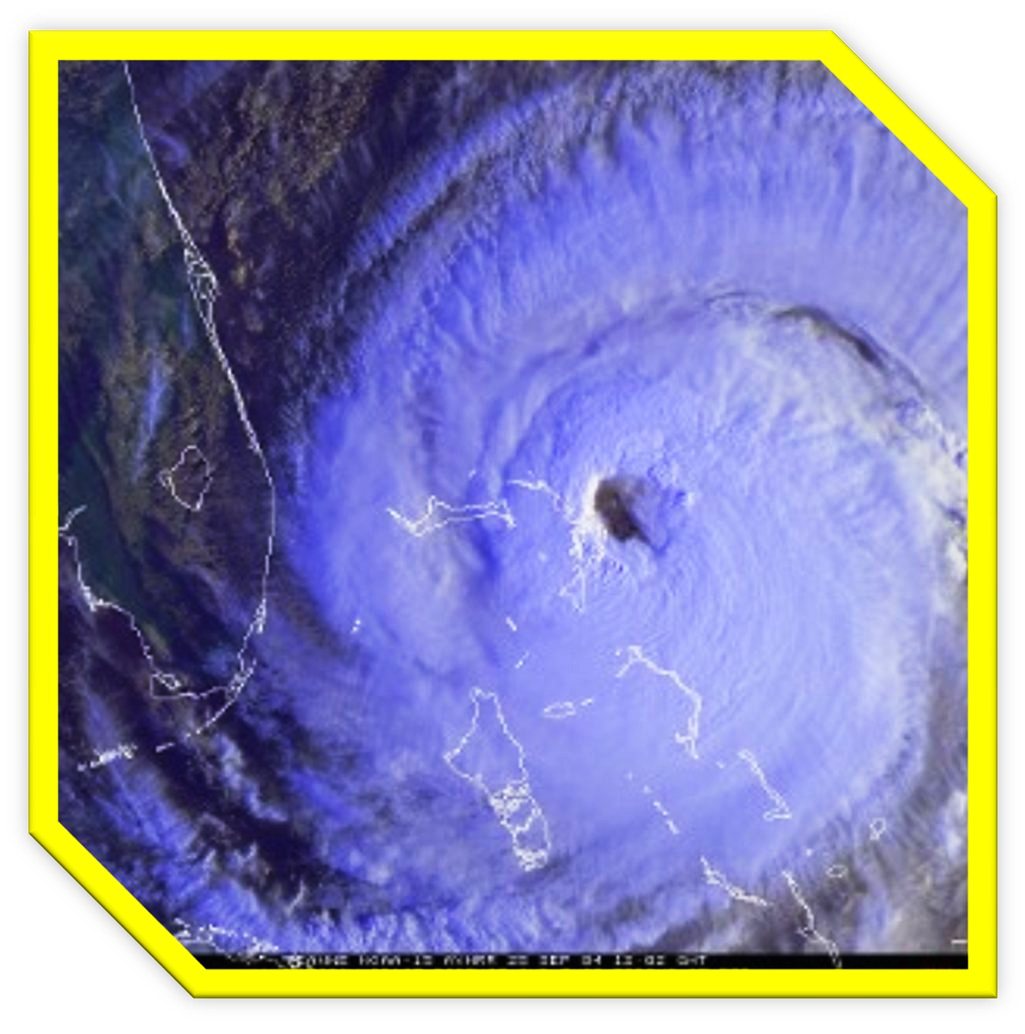
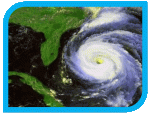 Hurricane Terms:
· Tropical Depression – an organized system of clouds and thunderstorms with a defined circulation and maximum sustained winds of 38 mph (33 knots) or less.
· Tropical Storm – an organized system of strong thunderstorms with a defined circulation and maximum sustained winds of 39 to 73 mph (34-63 knots).
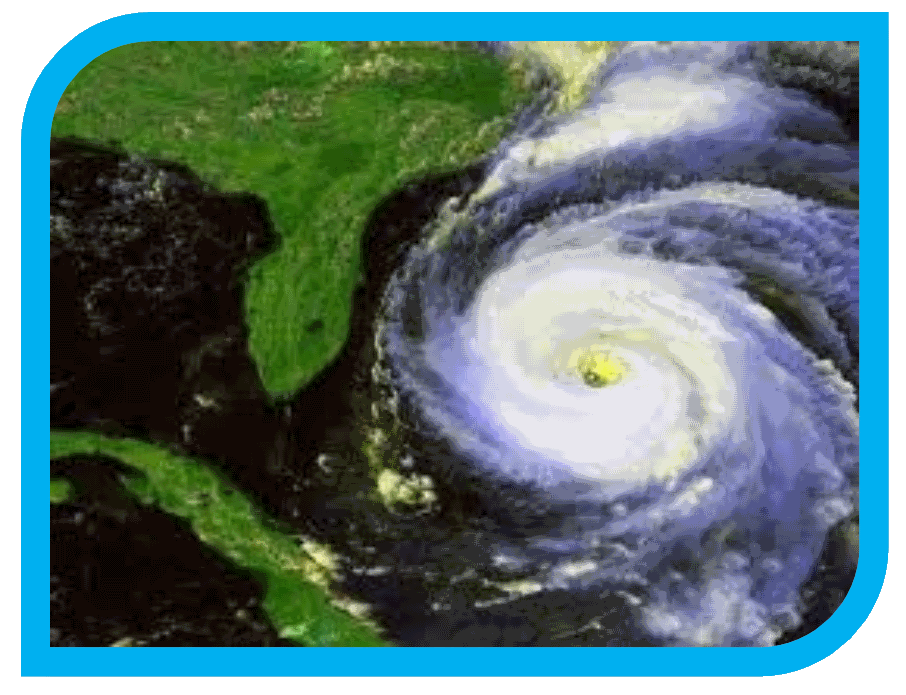
· Hurricane – a warm-core tropical cyclone with maximum sustained winds of 74 mph (64 knots) or greater.
· Eye – center a hurricane with light winds and partly cloudy to clear skies. The eye is usually around 20 miles in diameter, but can range between 5 and 60 miles.
· Eye Wall – location within a hurricane where the most damaging winds and intense rainfall are found.
· Severe Thunderstorm – a thunderstorm with winds 58 mph or faster or hailstones three-quarters of an inch or larger in diameter.
· Tornadoes – violent rotating columns of air that touch the ground; they are spawned by large severe thunderstorms. They can have winds estimated from
100 to 300 mph.
· Tornado Watch – tornadoes and severe thunderstorms are possible.
· Tornado Warning – tornadoes are detected in your area. Take shelter!
http://www.microshield-es.com
• John P. Lapotaire, CIEC
• Certified Indoor Environmental Consultant
• Microshield Environmental Services, LLC
• www.Microshield-ES.com
Share this with the #IAQS:
Leave a Comment » | Commercial IAQ, Flood Information, Hurricane Information, Residential IAQ, Storm Damage Information | Tagged: air quality, ASTM, Chapter 468, ciec, Department of Business and Professional Regulation, Florida DBPR, Florida Statutes, HB 4171, HB 5005, HB 5007, healthy home, House Bill 713, IEQ 3.2, IESO, indoor air quality, Indoor Environmental Standard Organization, john lapotaire, John P. Lapotaire, LEED, microshield, mold, mold inspection, mold pretreatment, mold prevention, mold remediation, mold removal, mold testing, Mold-Related Services Licensing Program, new home mold, Part XVI, PCB BCAS 11-01, Residential Mold Assessment, SB 1244, Senate Bill 2234, USGBC | Permalink
Posted by John P. Lapotaire, CIEC
July 5, 2011
Enforcement of Unlicensed Activity for Mold Assessors and Mold Remediators will begin July 1, 2011
In addition, this delay helped to identify any unintended consequences of the new legislation and present possible solutions during the 2011 Legislative Session.
Starting on July 1, 2011, the full enforcement of mold assessor and mold remediator licensure requirements per Chapter 468, Part XVI, Florida Statutes.
This means anyone holding themselves out to be a mold assessor or mold remediator needs to be licensed through the Department of Business and Professional Regulation.
Please review Chapter 468, Part XVI, Florida Statutes for the laws detailing Mold Related Services.
Share this with the #IAQS:
Leave a Comment » | Commercial IAQ, Residential IAQ | Tagged: air quality, ASTM, Chapter 468, ciec, Department of Business and Professional Regulation, Florida DBPR, Florida Statutes, HB 4171, HB 5005, HB 5007, healthy home, House Bill 713, IEQ 3.2, IESO, indoor air quality, Indoor Environmental Standard Organization, john lapotaire, John P. Lapotaire, LEED, microshield, mold, mold inspection, mold pretreatment, mold prevention, mold remediation, mold removal, mold testing, Mold-Related Services Licensing Program, new home mold, Part XVI, PCB BCAS 11-01, Residential Mold Assessment, SB 1244, Senate Bill 2234, USGBC | Permalink
Posted by John P. Lapotaire, CIEC
 Toxic chemicals can be found everywhere we look. Whether they are in your home, or the ground underneath, it is important to be aware of chemicals with which you and your family may come in contact.










 Indoor Air Quality Solutions, IAQS